Some things you notice or get thinking about when you’re travelling merit a stonking great write-up. It can help try to bring meaning to what you’re seeing and keep the experience alive once you’ve returned home. But others are all about the photos and need just a smattering of facts and a little explanation. Our trip to Bolivia’s salt flats at Salar de Uyuni falls into this second category.
A few facts. Bolivia’s salt flats are the largest in the world at 10,582 square kilometres. They are located at Salar de Uyuni, 3656m above sea level. The flats are used for satellite calibration as the surface elevation varies just 1 metre across the 10,582 square metres. And, for anyone interested in this kind of thing, Bolivia holds about 43 per cent of the world’s known lithium reserves – most of those are in the Salar de Uyuni.
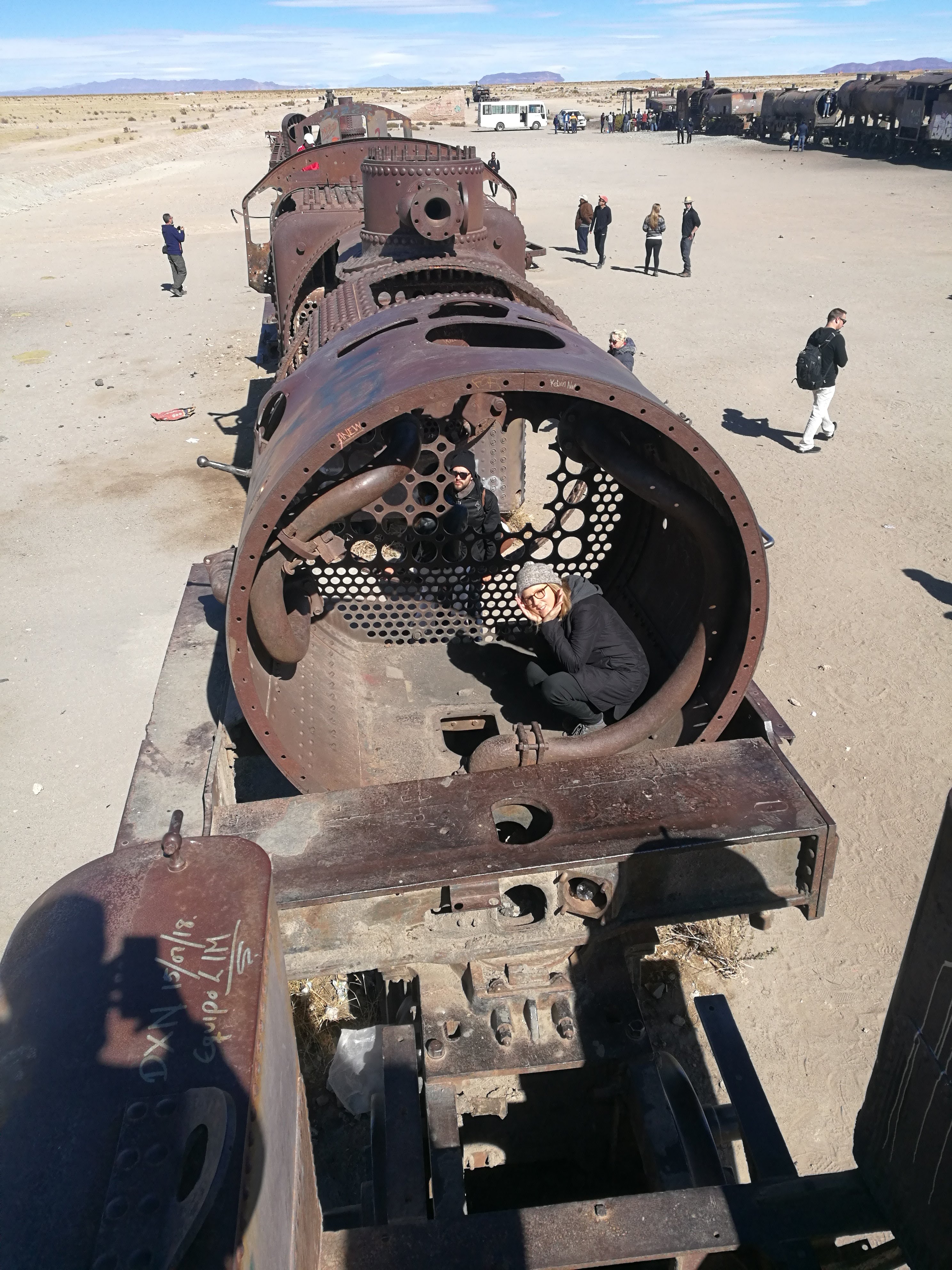
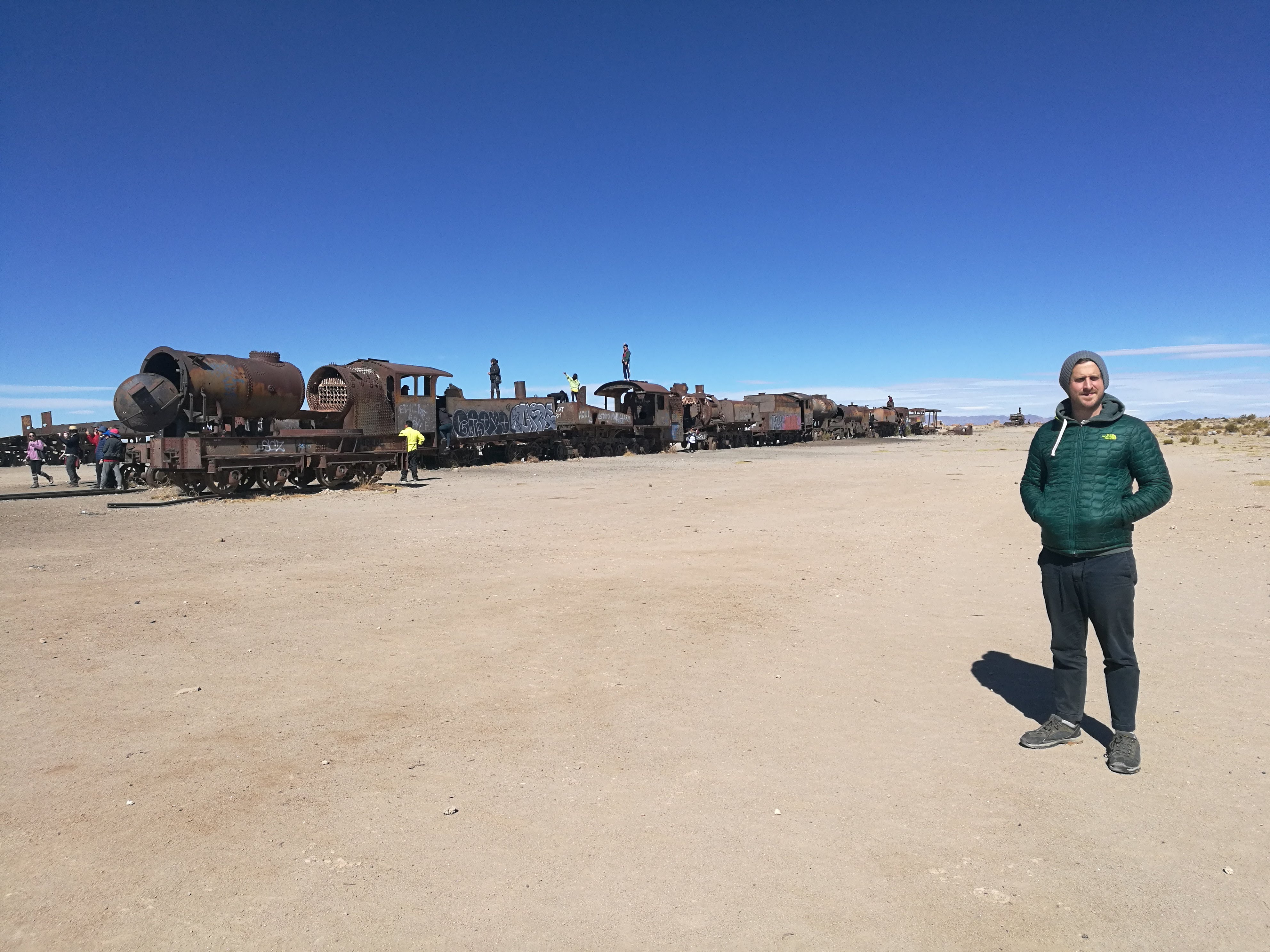
Our first stop was a ‘train graveyard’ that sits at the edge of the flats. The rusting engines, strings of abandoned wagons and wrecked carriages are testament to the failure of Bolivia’s early 19th century dream of setting itself up as a major South American transport hub. Nowadays tourists clamber in and out of the wreckage and redundant rails extend to nowhere. Fun to mess around here for a few minutes – anoraks may need longer.
We then headed further into the flats. Our vehicle had been squished in a pack of other tourist 4x4s at the graveyard, our lunch spot and on the highway to the flats. As we got onto the flats proper, each driver charted their own course, the throng broke up and the vastness of our surroundings became more apparent. We all remarked that we wouldn’t want to drive across this landscape for long. The featurelessness, the lack of road markings – or in fact any indicators of where you are – and the fact you can’t see any defined start or end point of the flats once you have advanced a few kilometres into them mean you need to keep focused and not nod off or engage in wacky driving through boredom.
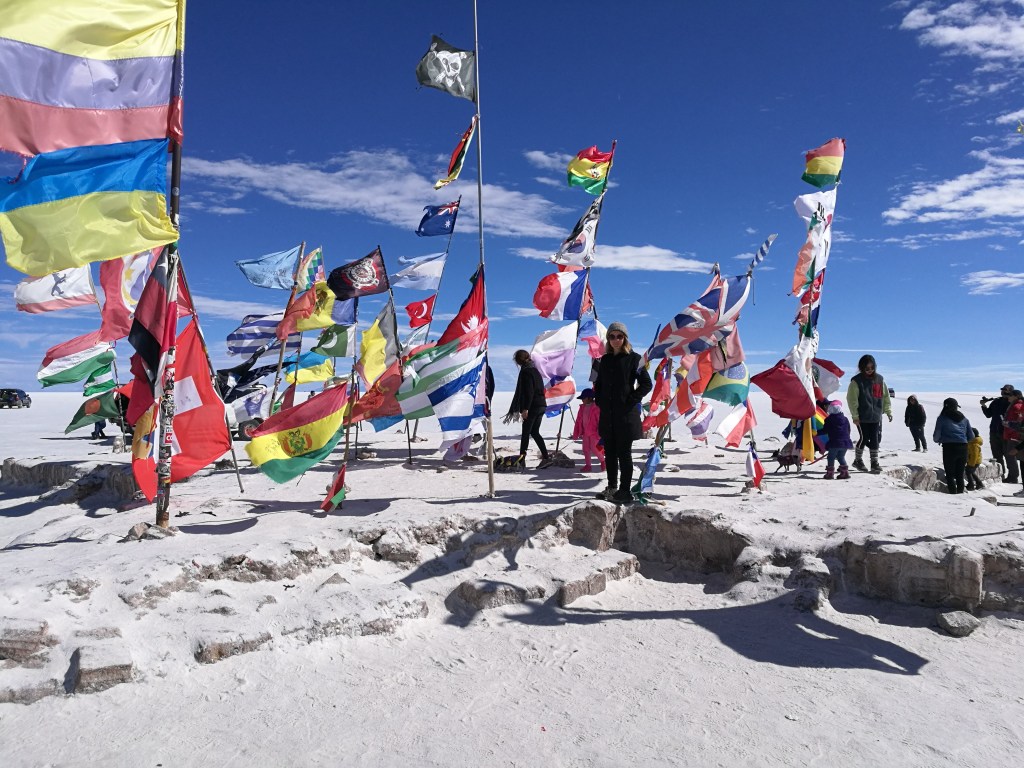
We had a look around an abandoned hotel made of salt – abandoned as the owners weren’t too fussed about removing waste (that of course otherwise won’t go away out here!) from the site. This caused predictable issues and they were shut down but dozens of flags fluttering outside still make it a decent place to take a few photos.
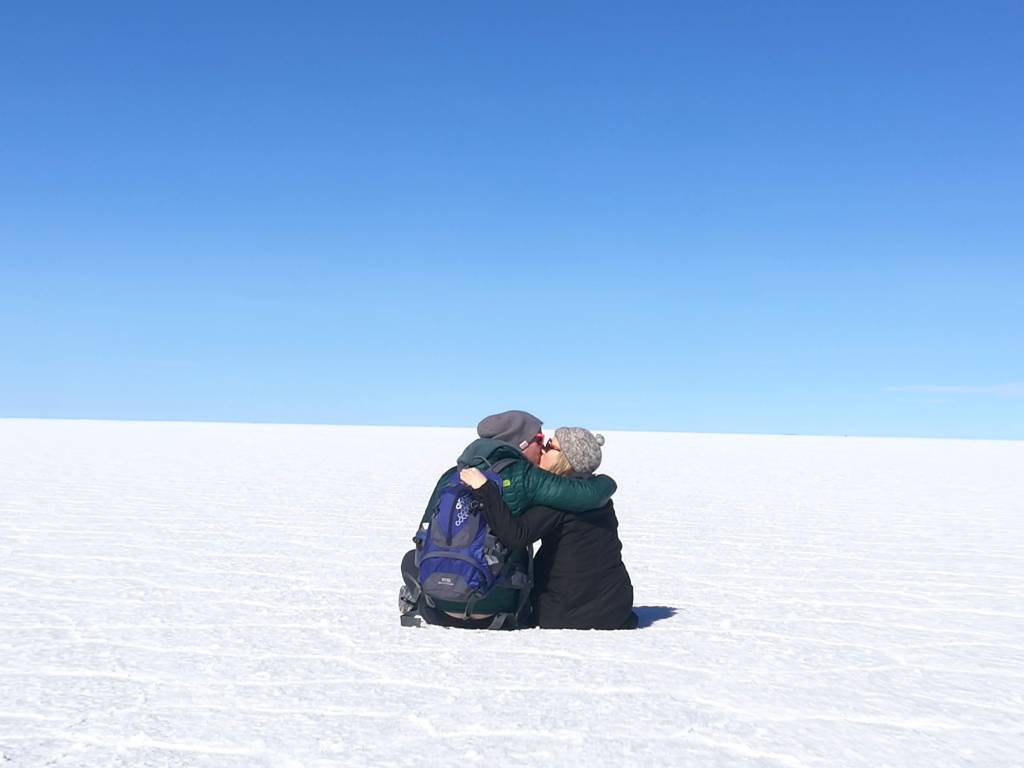
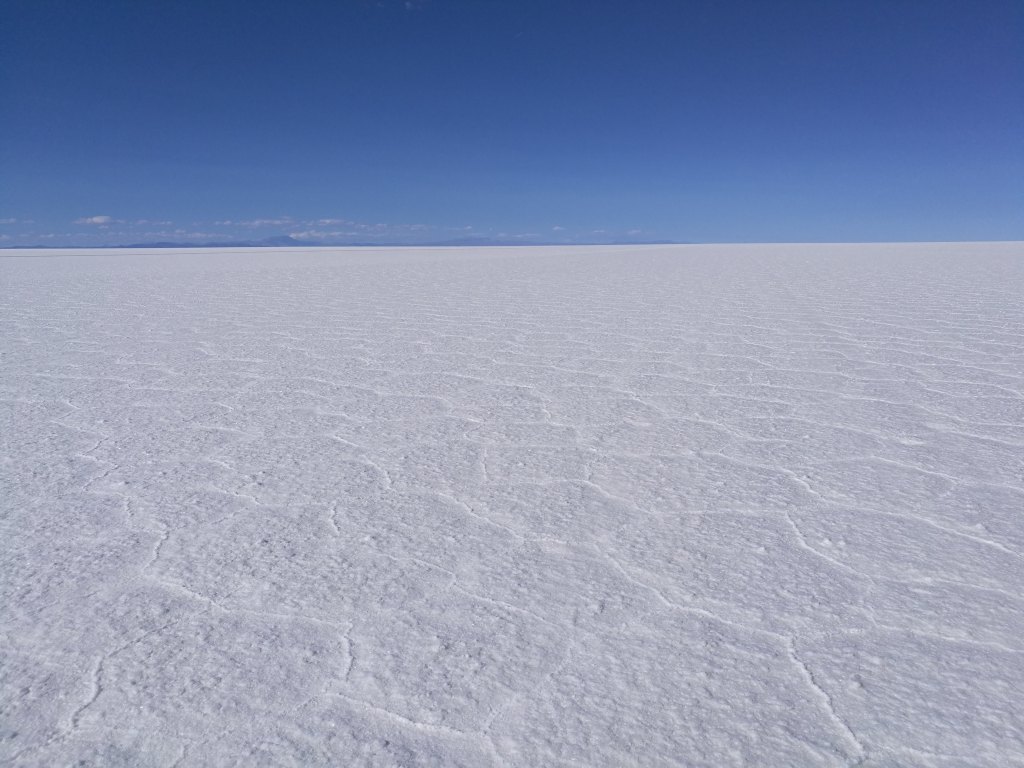
Standing on a patchwork of polygons was our first post-Iguazu reminder that nature is responsible for some weird and strangely beautiful things. Apparently these shapes are formed when water evaporates off the flats, leaving this giant bee hive effect.
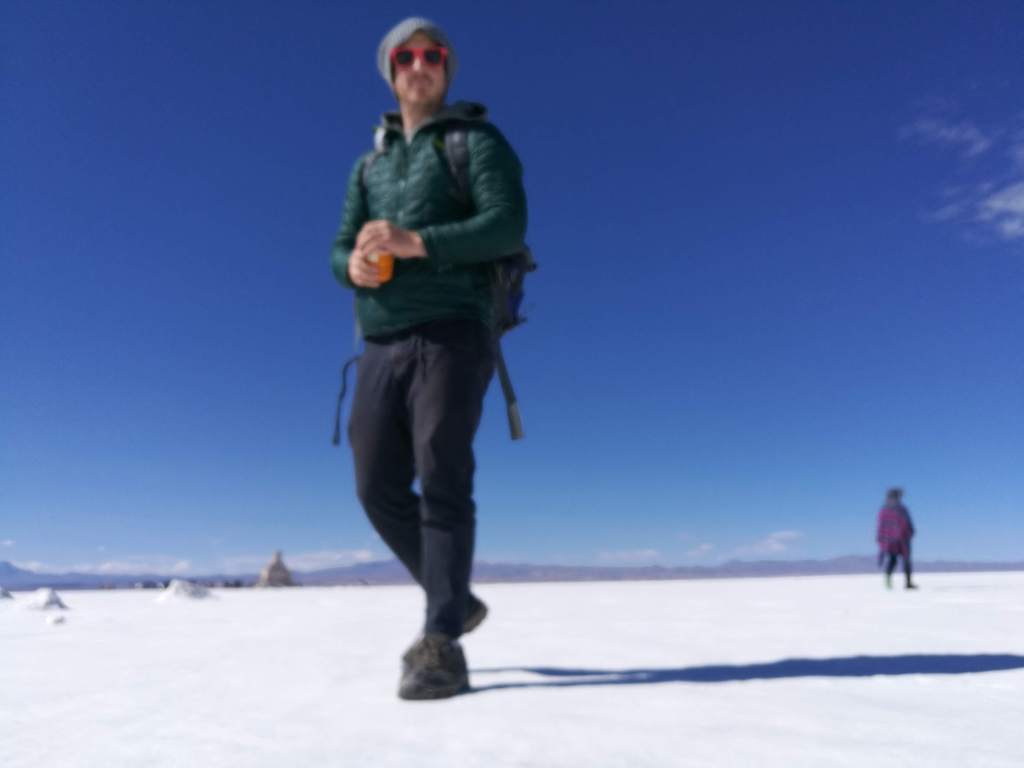
At this point our driver’s latent abilities as a trick photographer extraordinaire emerged. He bossed our party of seven into a variety of improbable poses. As we couldn’t see how things were working out at the time – he took our cameras and snapped the photos for us whilst we focused on the posing – we were all a bit bemused as our photo shoot stretched towards half an hour and our limbs began to seize up after contorting ourselves into another Ussain Bolt-inspired pose, bolstered by a variety of bizarre props.
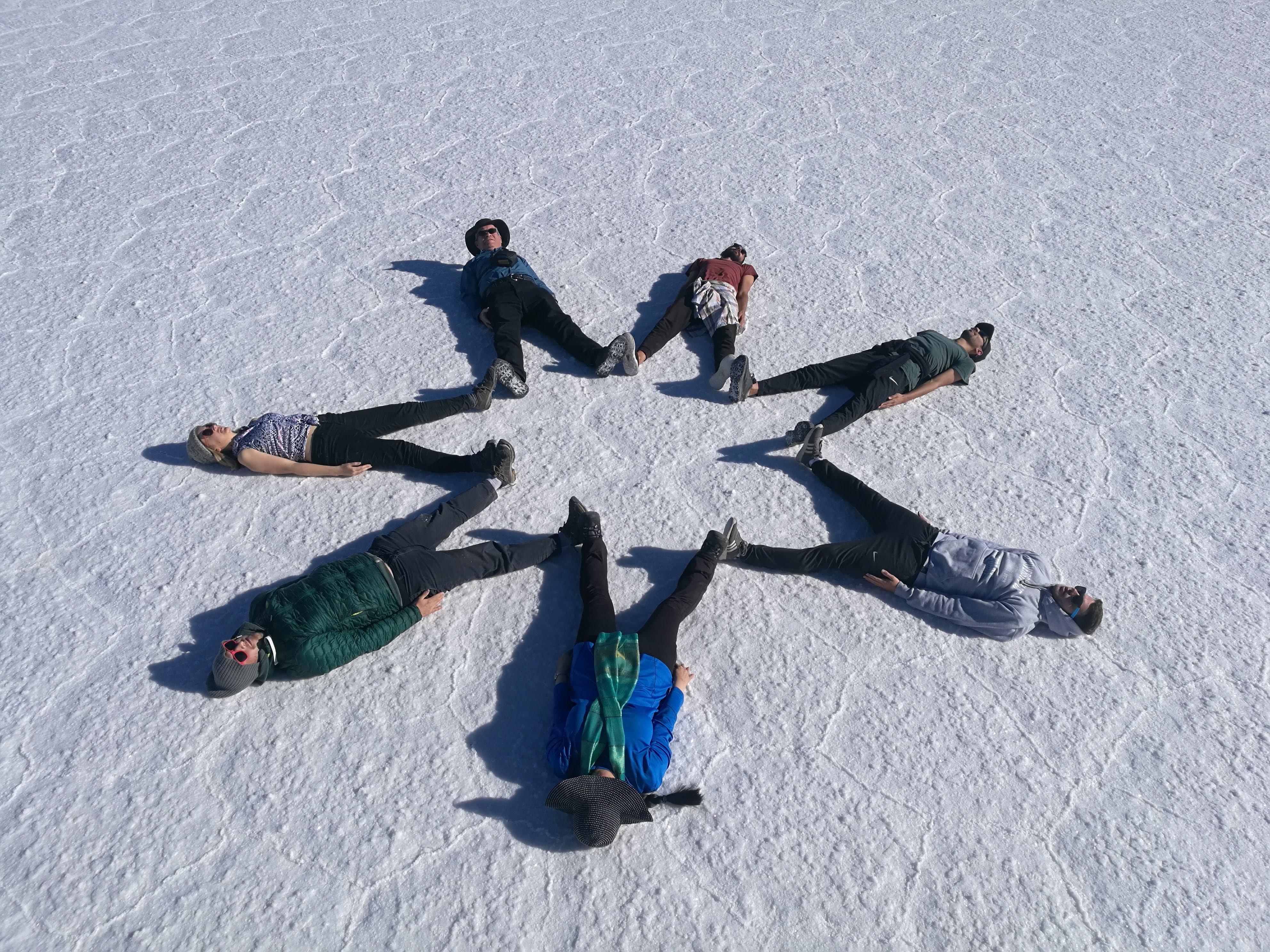
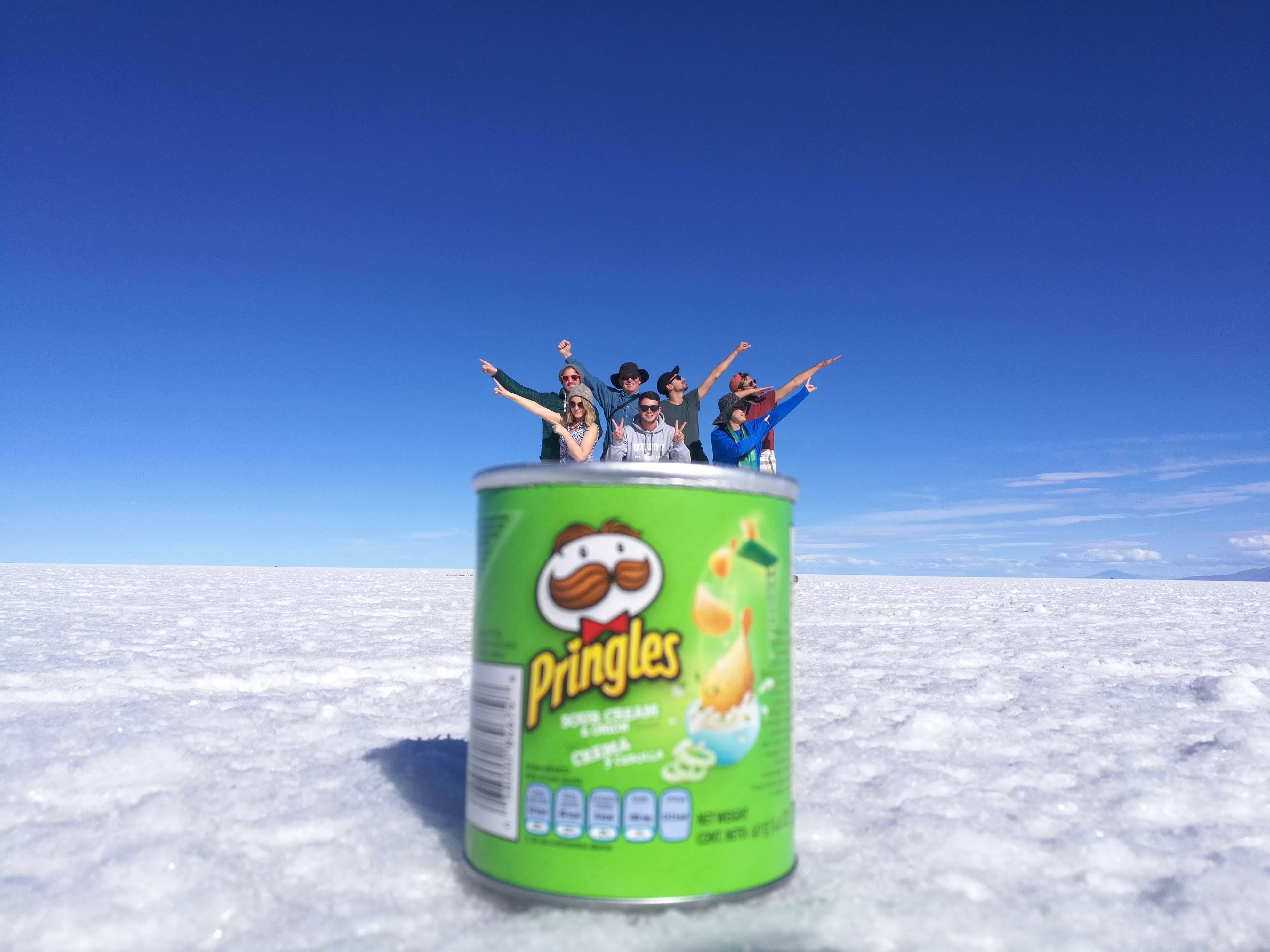
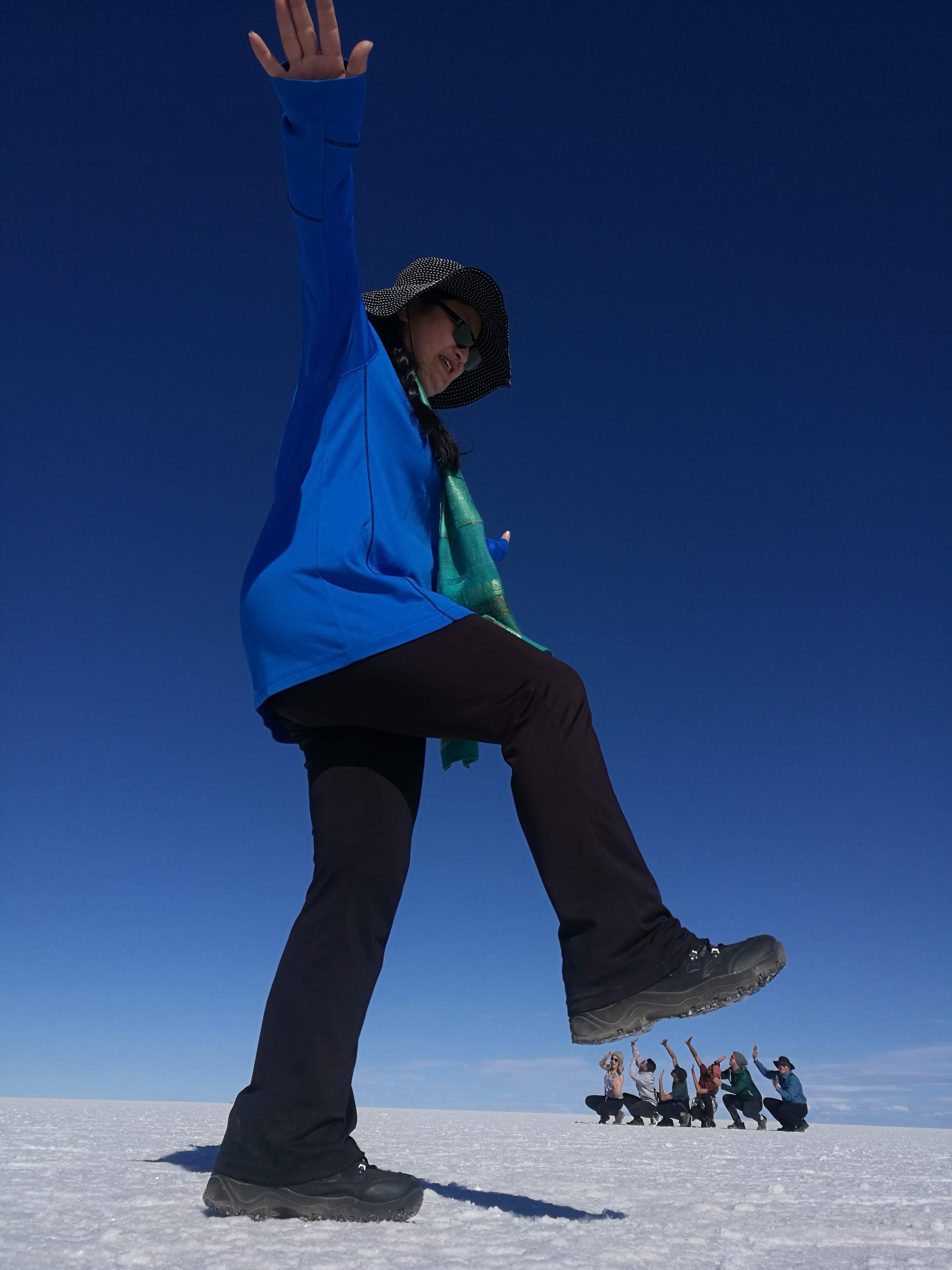
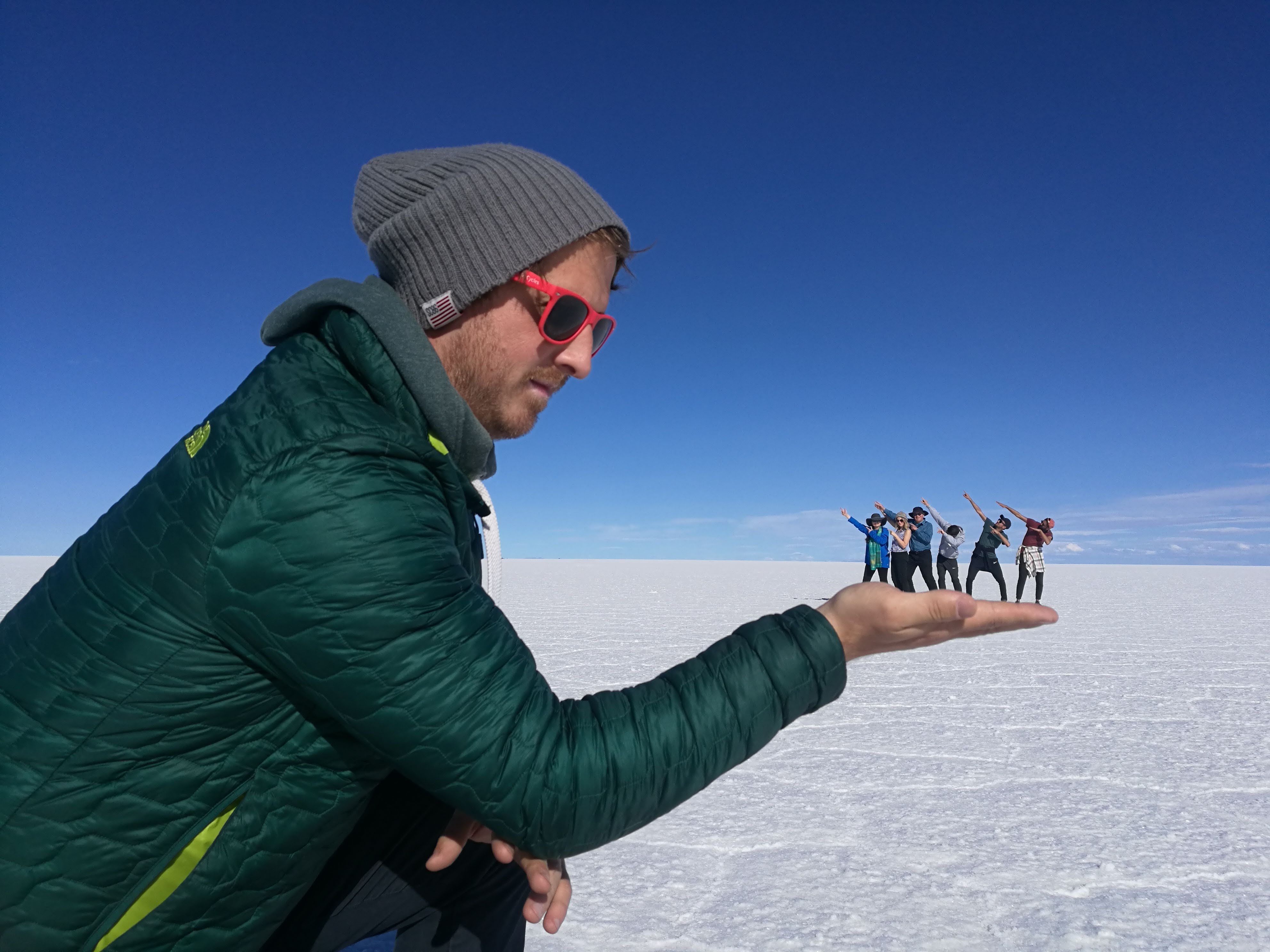
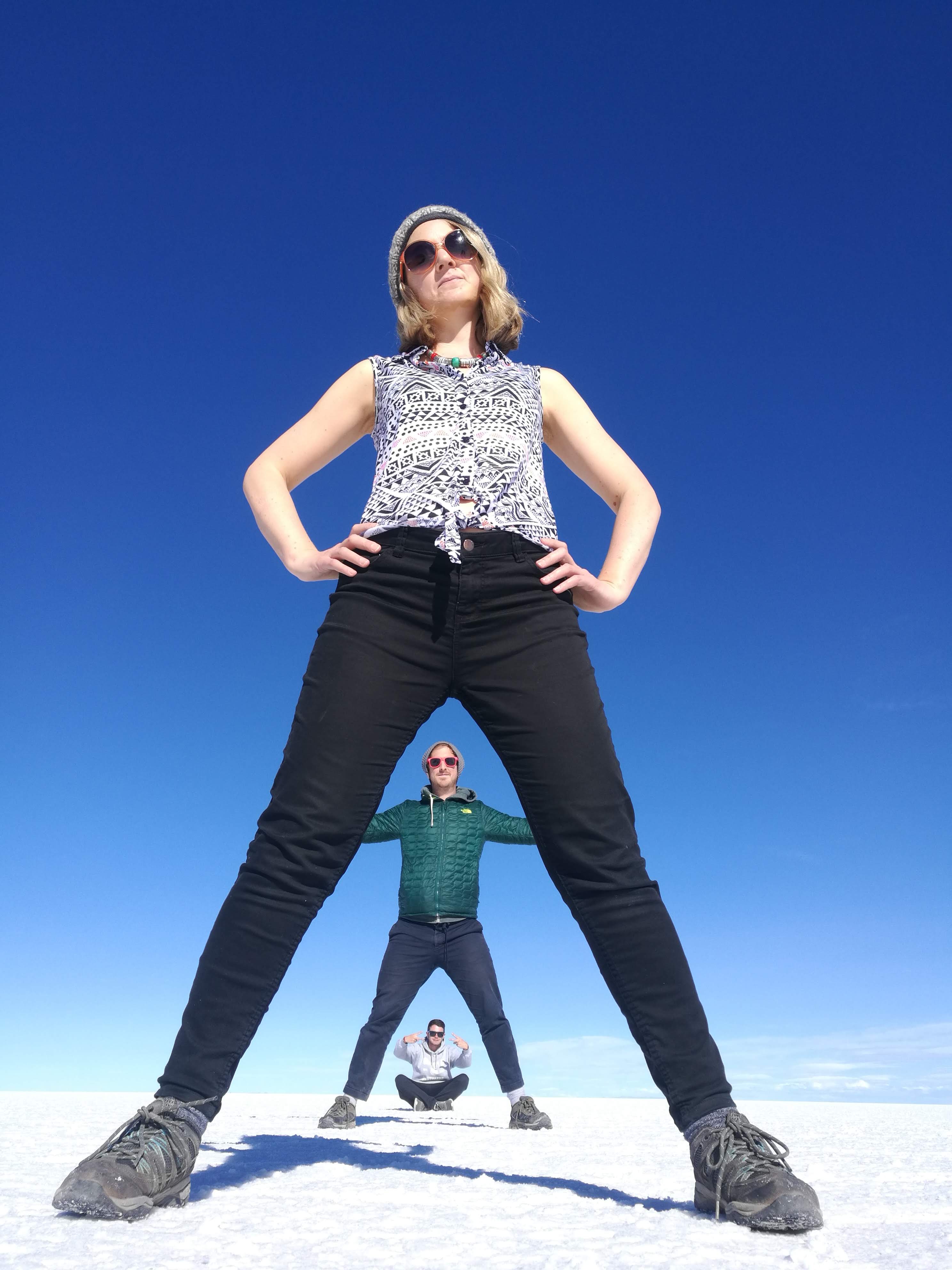
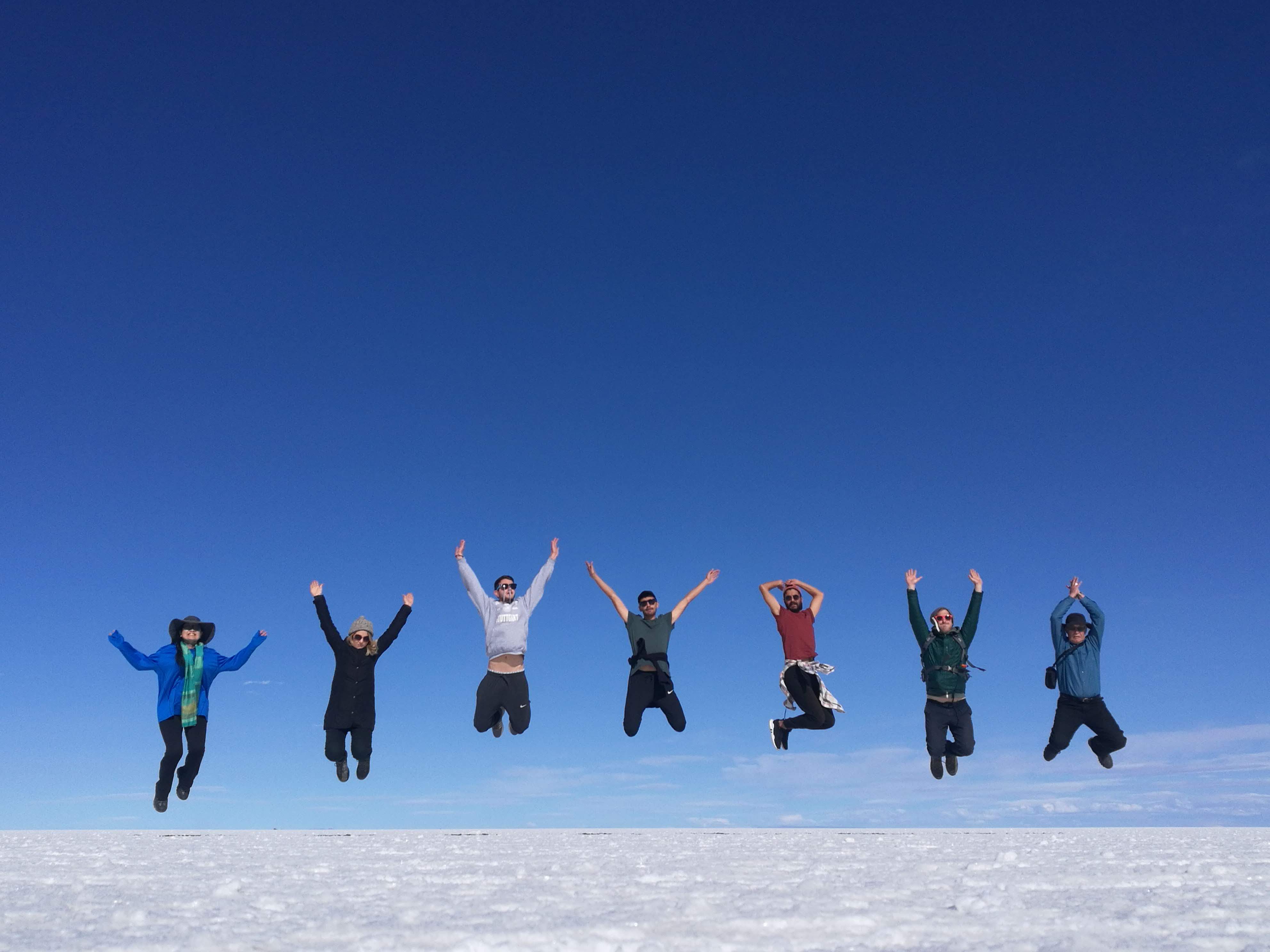
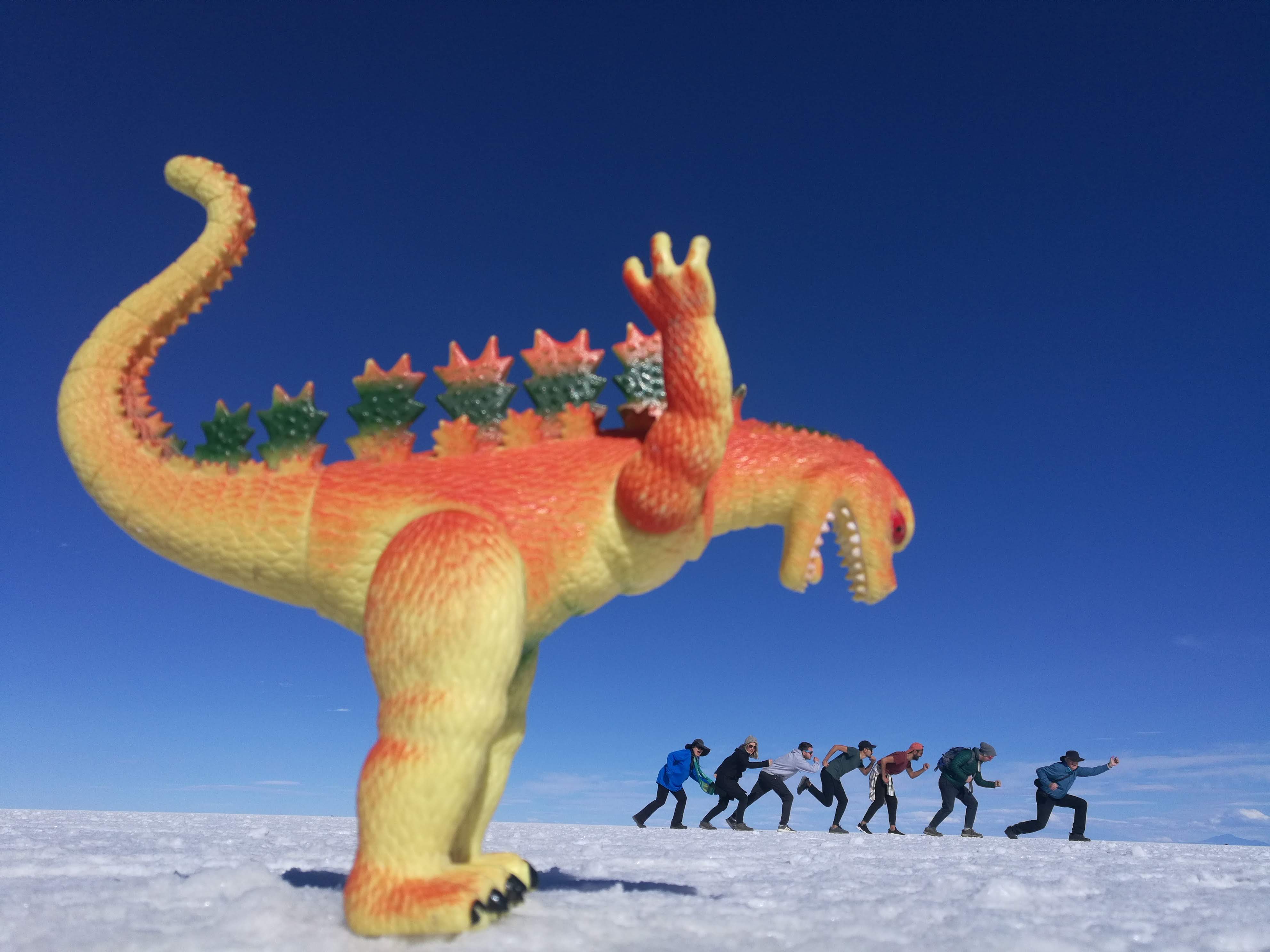
You’ll see the results are pretty unique and amusing. Little had we known we were being driven around by such a creative genius. After stopping off at fish island – one of the few spots in the flats with any vegetation and hence a few birds and viscachas (little rabbit things) – we headed to a waterlogged area where our maestro produced seven coloured picnic stools and set about positioning us frantically for more photos against the clock as the sun started to set. This was all good fun – by now we were used to his direction and after seeing the earlier photos we all knew he was skilled in getting results!
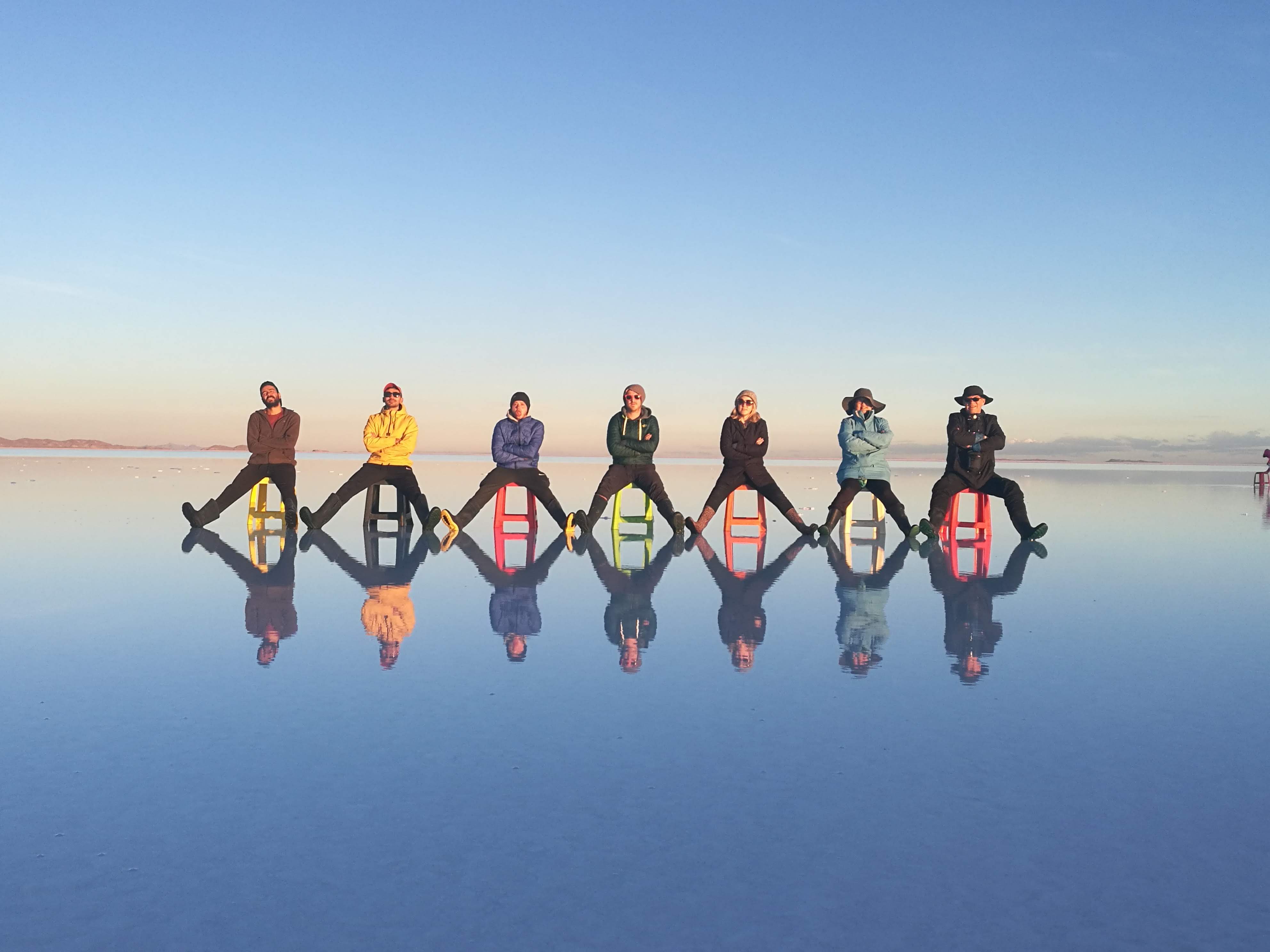

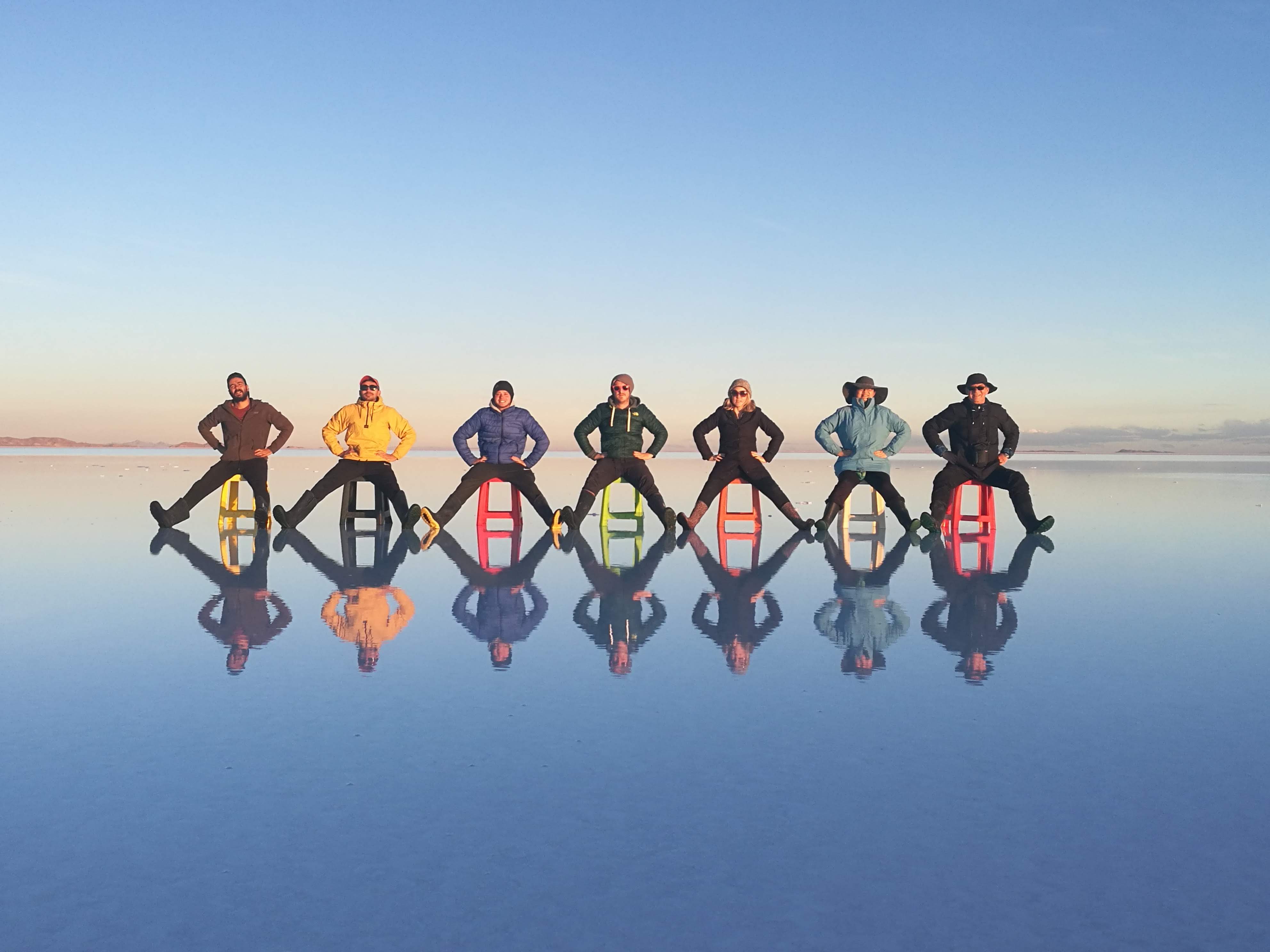
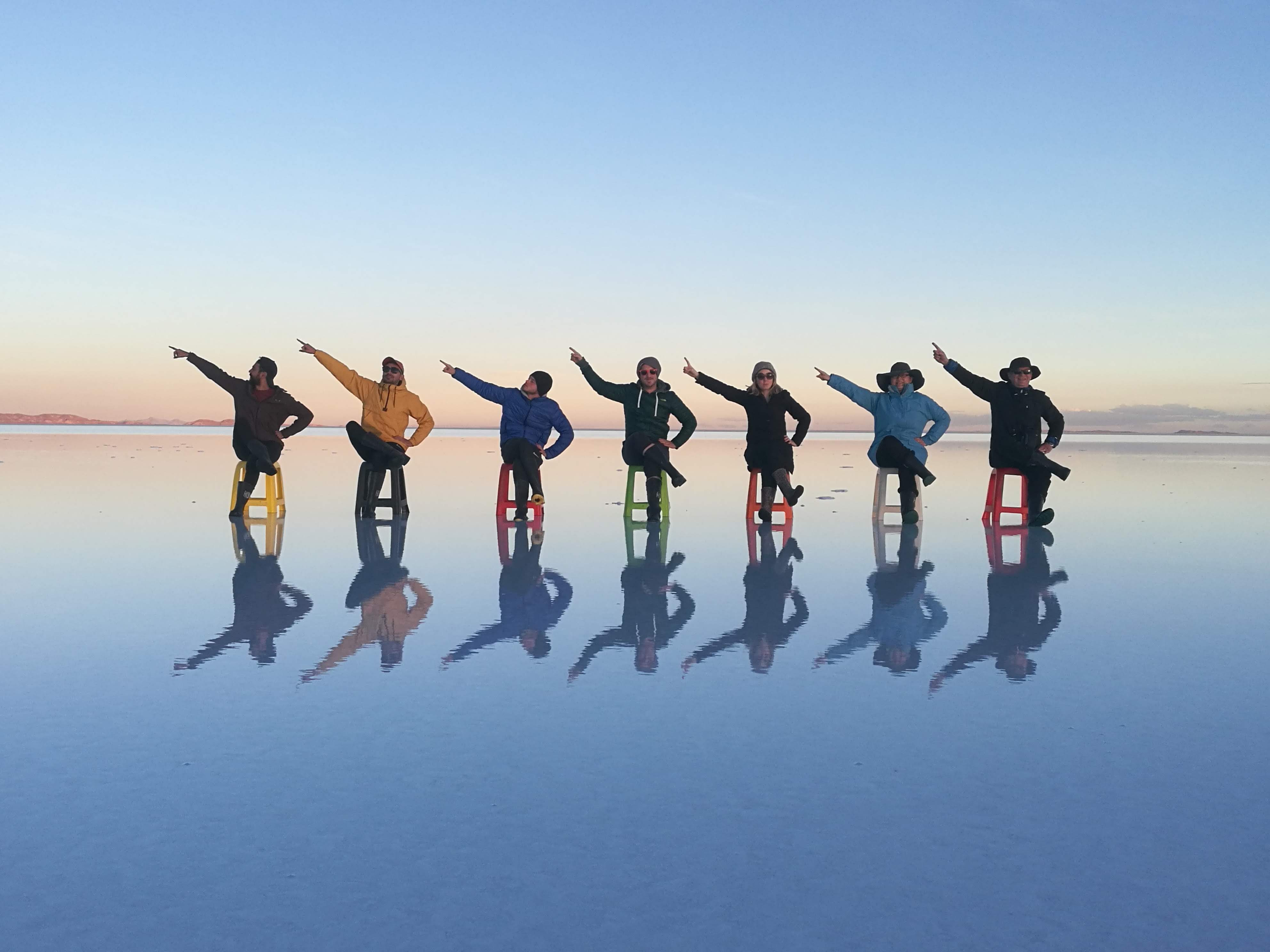
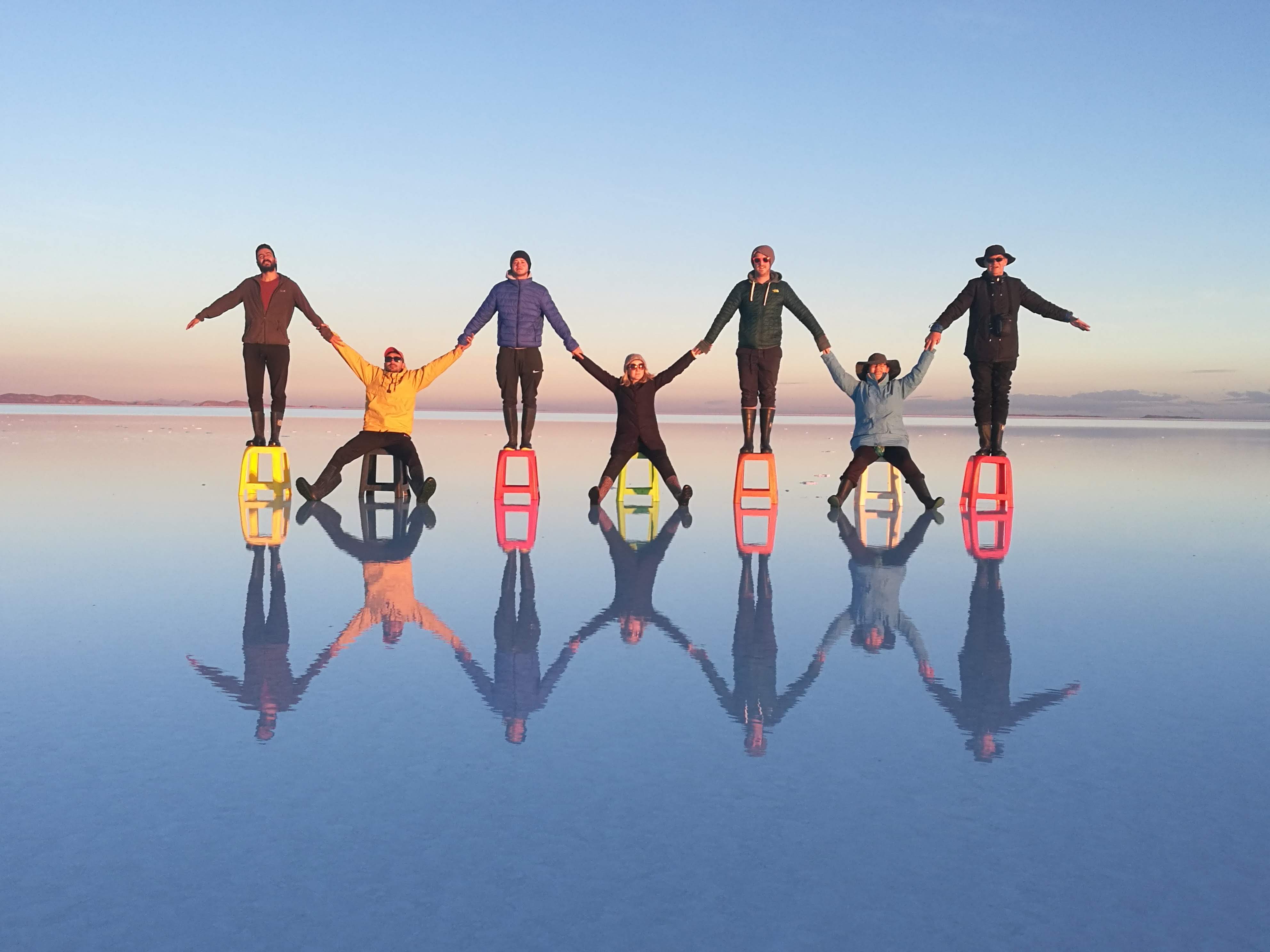
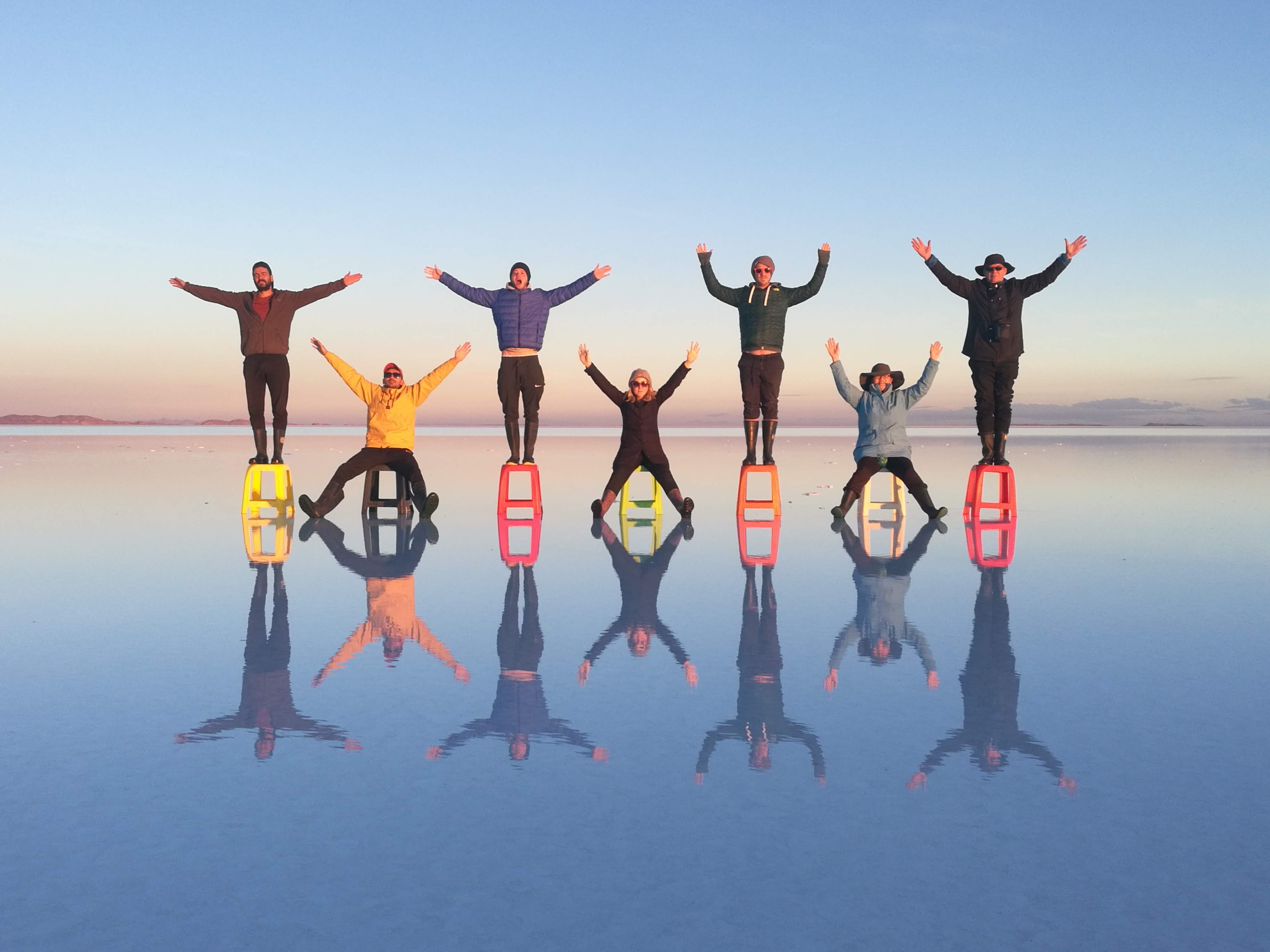
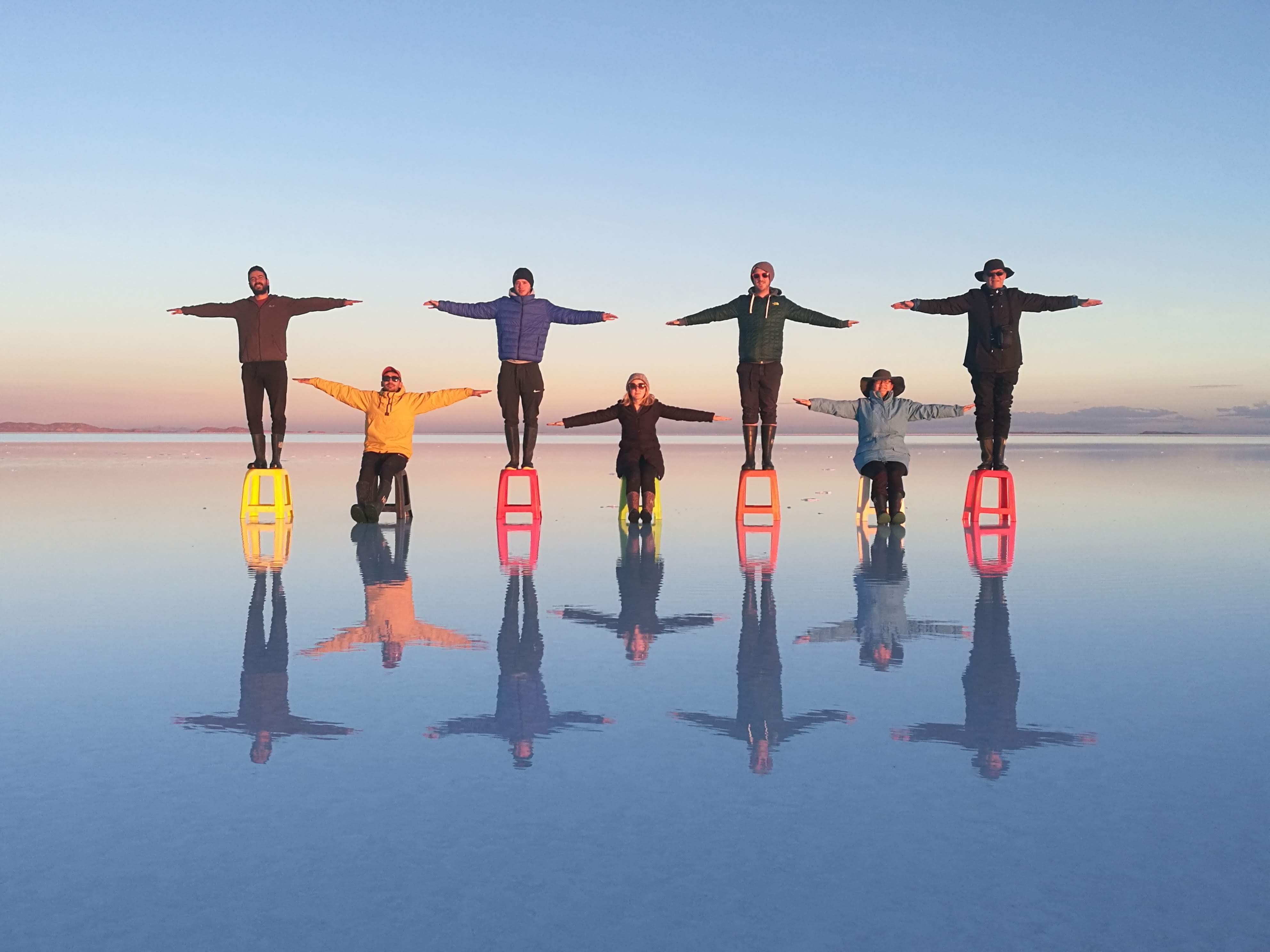

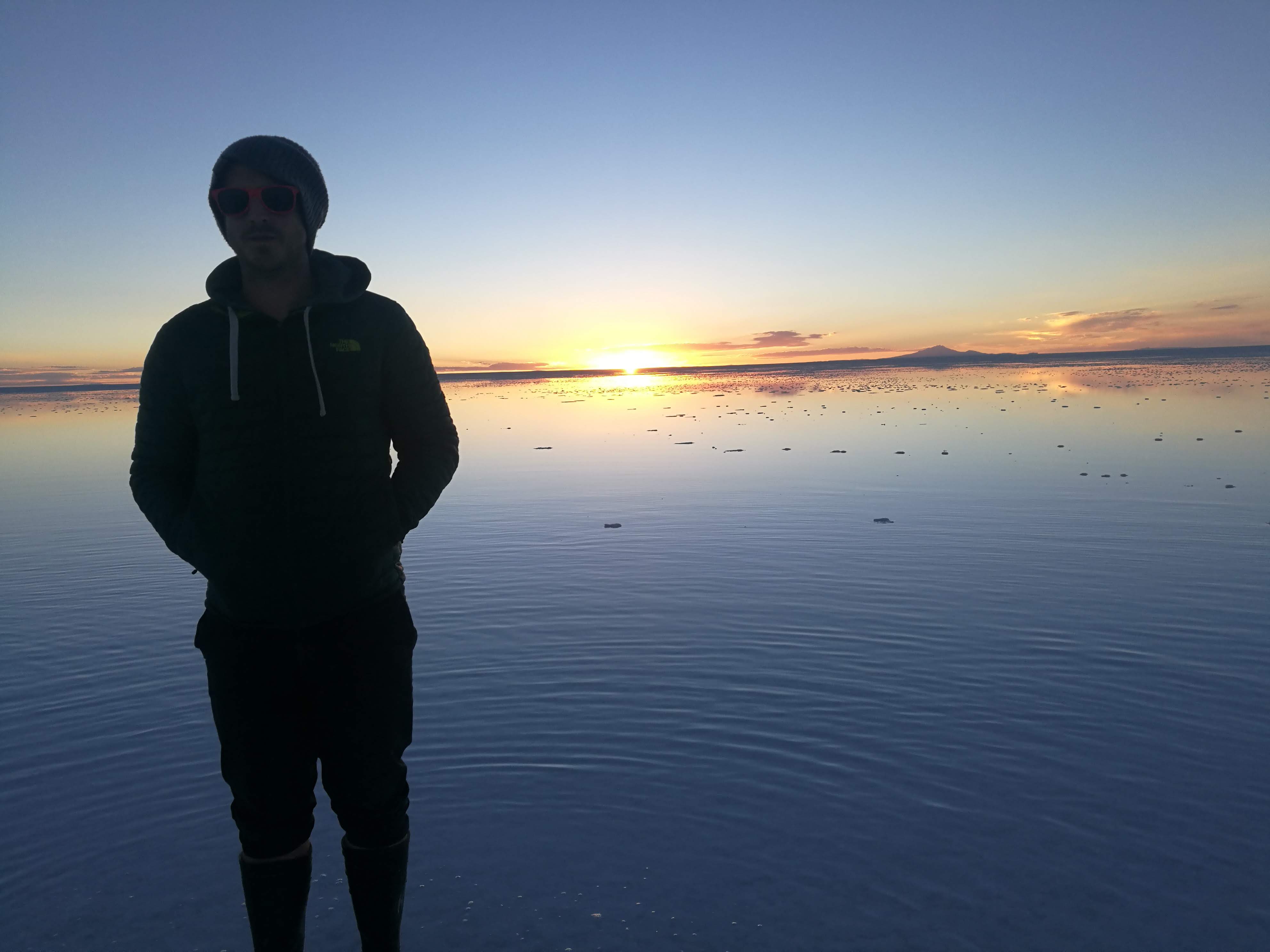
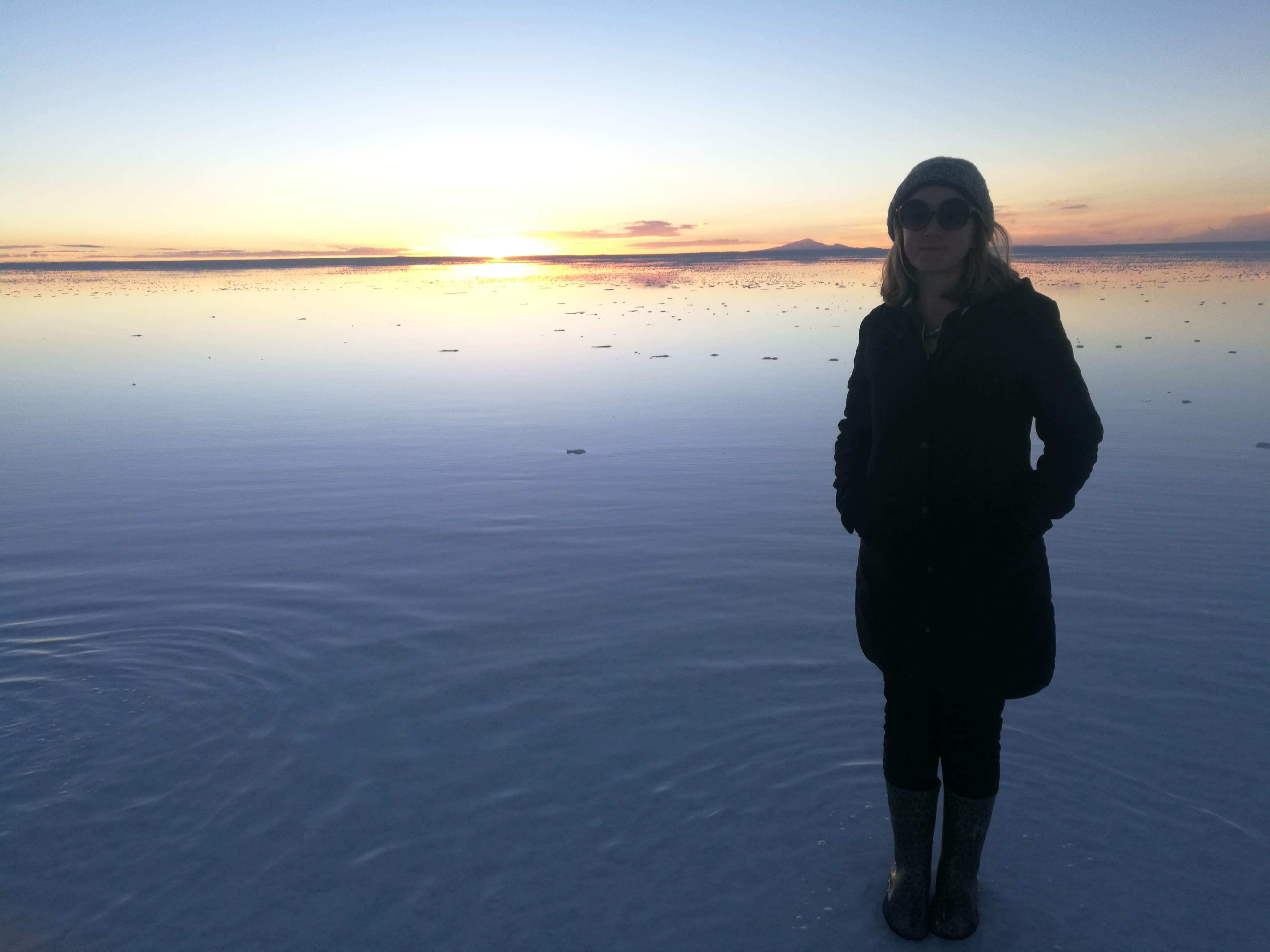
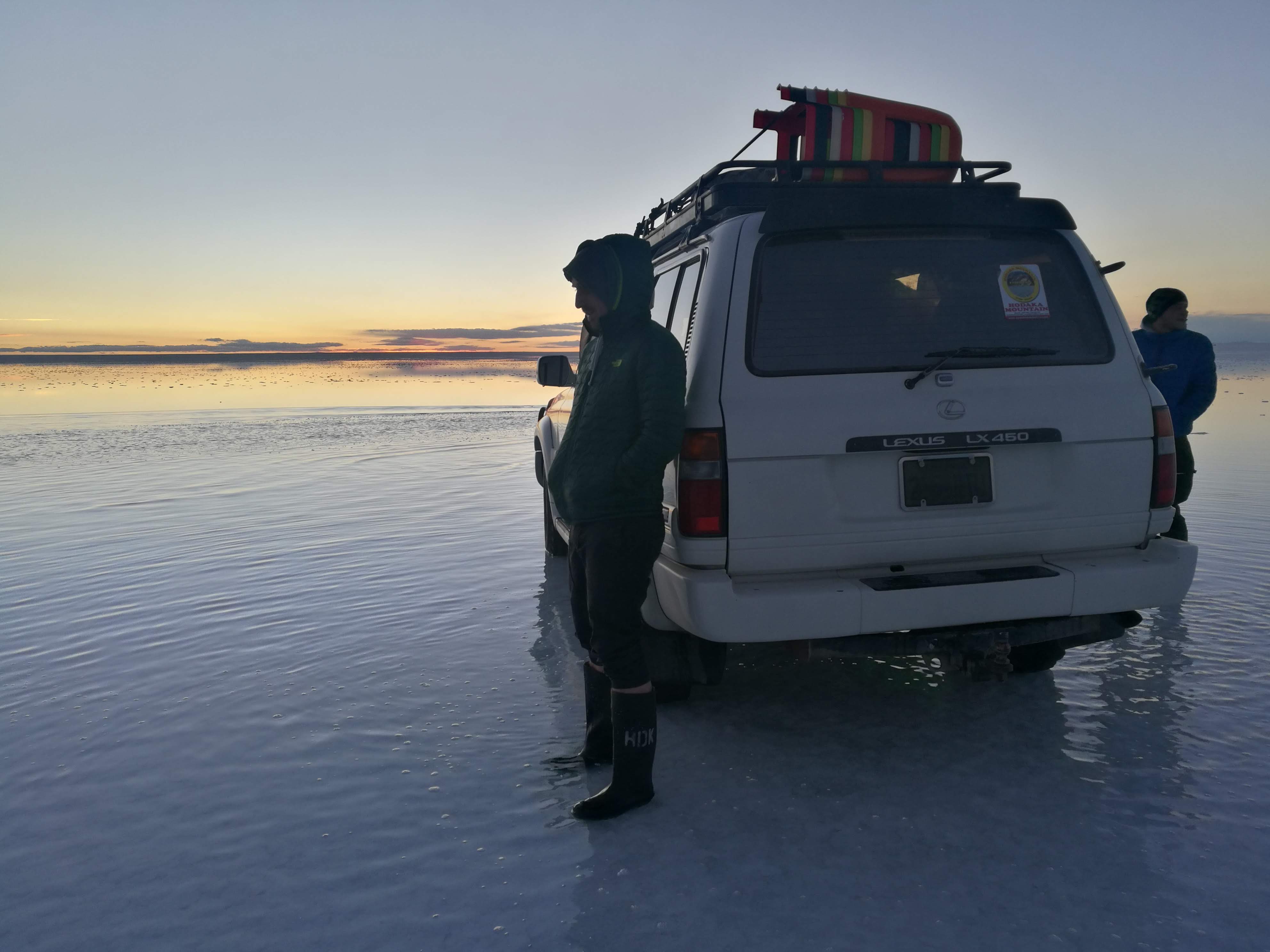
The sun setting across the flats was as mysterious, romantic and epic as the photos hopefully depict. We drank this view in, listening to the chatter emanating from other similarly entranced tourists huddled around the other vehicles dotted around. Our driver was keen to get moving quite quickly. We hadn’t realised that once the sun was gone, due to the total lack of lighting, signs or landmarks out here, he would be screwed in terms of getting us back onto the highway and back to Uyuni if he left it too long. He drove at quite a pace, following another vehicle through a couple of tyres dumped to shepherd vehicles towards the ‘way out’. We enjoyed swapping travel tips with our fellow travellers on the way back to town and, although knackered after a long day, were so pleased we did this. A really unique thing to do and we can’t think of anything like this that we have tried elsewhere on earth!

 South American stories