A big surprise during our time in Argentina was the prominence of the Falklands islands – ‘Las Malvinas’ in Spanish – in daily life and at places where Argentina’s identity as a nation is discussed, over 35 years after the conflict with the UK ended.
On day 1 we saw a huge ‘LAS MALVINAS SON ARGENTINAS’ (THE FALKLANDS ARE ARGENTINIAN) sign up inside one of the inner-city military compounds in Buenos Aires. This was a little surprising considering the Falklands War is so little discussed in the UK and the islands generally viewed as a bit of a far-flung, windswept obscurity back home. We’ve since seen lots of tactics – discussed below – being used by the government to keep alive the issue of who should own the islands. When it comes to our view on what should happen to the islands…there are good points on both sides so we aren’t making a definitive statement on that. Hopefully everyone can agree it’s a fascinating issue to study and that whatever happens in the future needs to be peaceful.
Argentina’s invasion in 1982 was, as explained so clearly in the museum we talk about later, arguably an attempt to shore up support for the dictatorship, coming just days after huge anti-junta protests across the country. That the future of the islands was hijacked by a now-discredited, even hated regime is a cause of great regret to the present authorities, it seems, with this big mistake undoing years of supposed slow and careful soft power work under Perón and others to win the islands back peacefully.
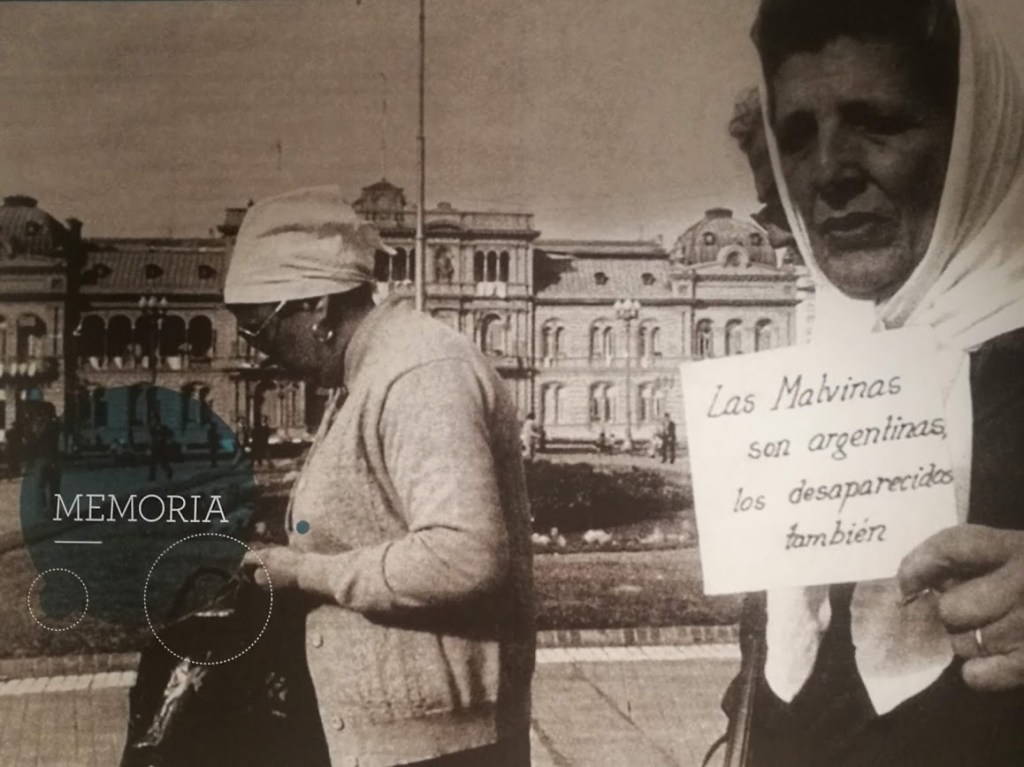
The Falklands issue has been kept ticking over by the Argentinian government with more activity coming post the 2001 economic crash. Training peoples’ minds on an external enemy or injustice is of course a strategy used by those in power the world-over to deflect attention from domestic problems and encourage nationalist sentiment by shifting the focus to powerful narratives about a country’s future. An added twist in the Argentinian case is that even some of the staunchly anti-junta mothers of the disappeared rallied behind the dictatorship’s campaign to win the islands back.
Anyway, what specific tactics have we seen being used?
- 50 peso bank notes featuring a map of the islands being introduced to mark the 33rd anniversary of the war in 2015
- A glut of apparently new memorials to the fallen heroes of the war – we stumbled upon the opening ceremony for one in Tigre, a small delta town 45 minutes away from Buenos Aires. This involved a large gathering of veterans and others in uniform. The memorial was being opened to mark the 38th anniversary of the ‘Day of Maximum Resistance’ – the day when Argentinian troops continued to fight after Argentina had officially surrendered. It reads ‘The Falklands were, are and will be Argentinian’. We also found memorials in most other towns and cities we visited.
- Information pillars quite incongruously placed in public parks in Buenos Aires giving details of the geography, flora and fauna on the islands
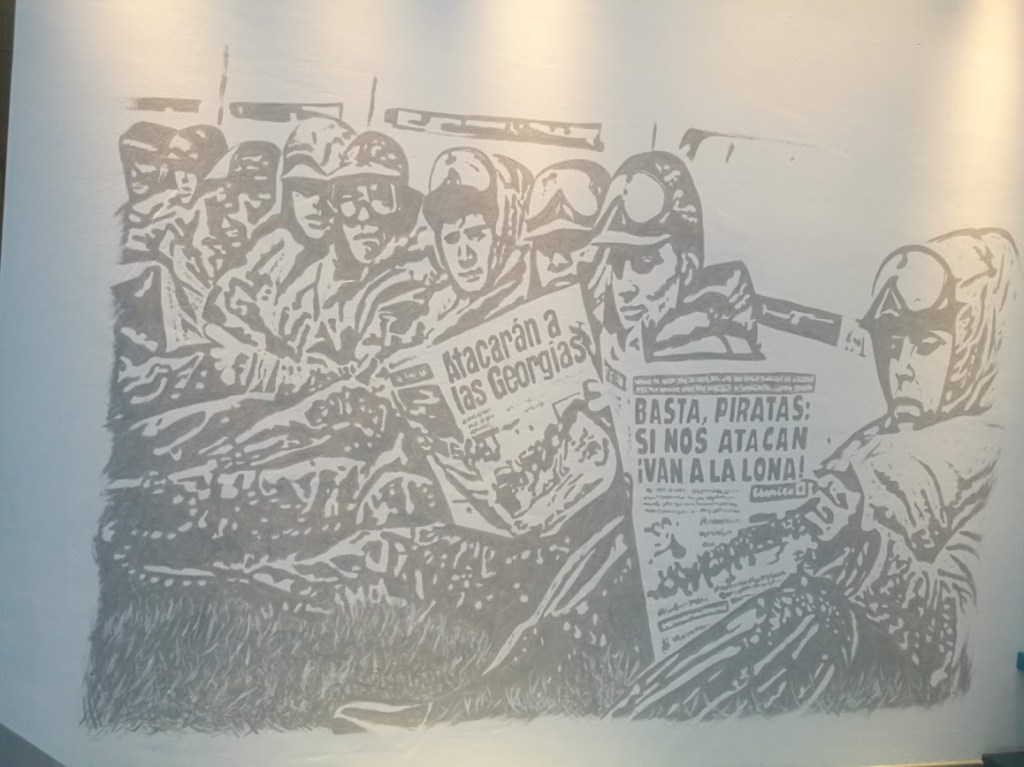
- Public art on spare bits of wall all over the city depicting heroic wartime exploits
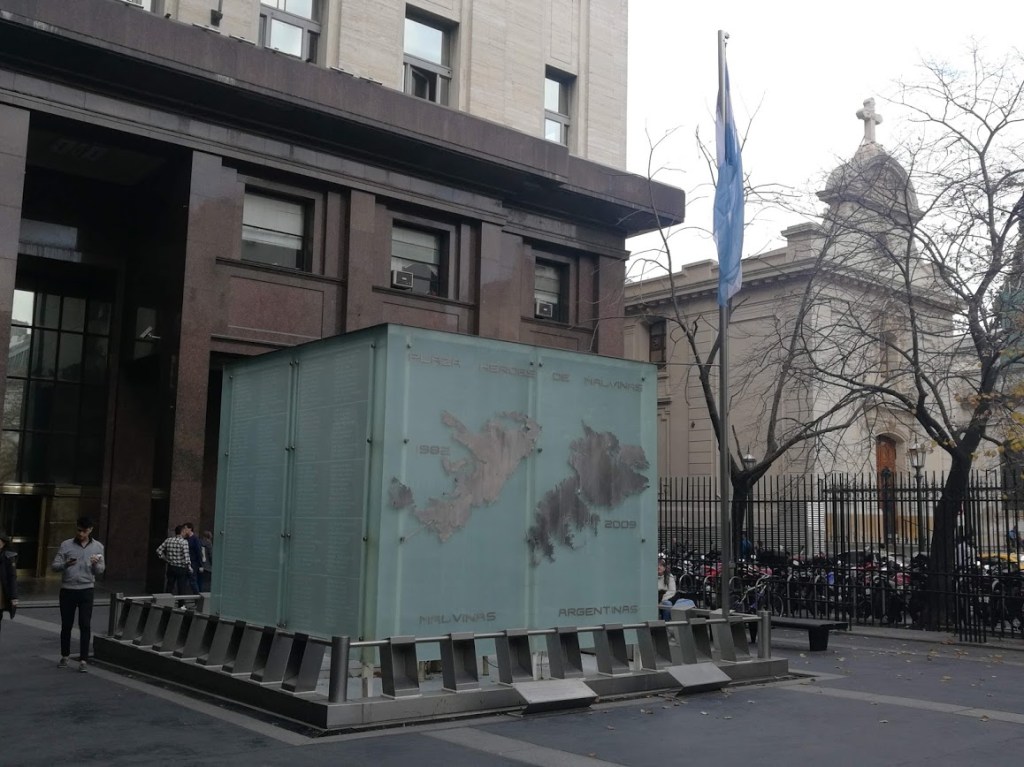
Main memorial in Buenos Aires 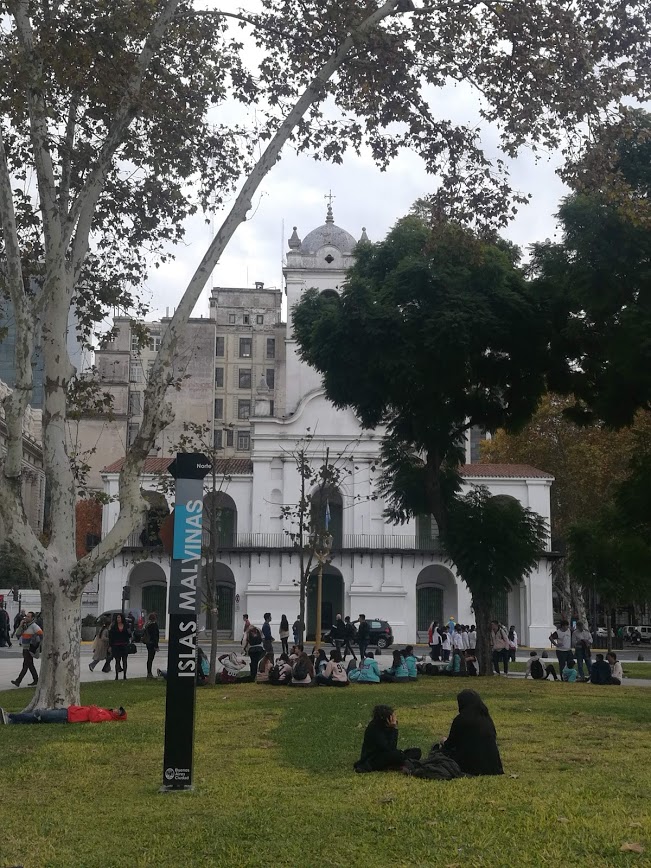
Falklands info pillar, Plaza de Mayo 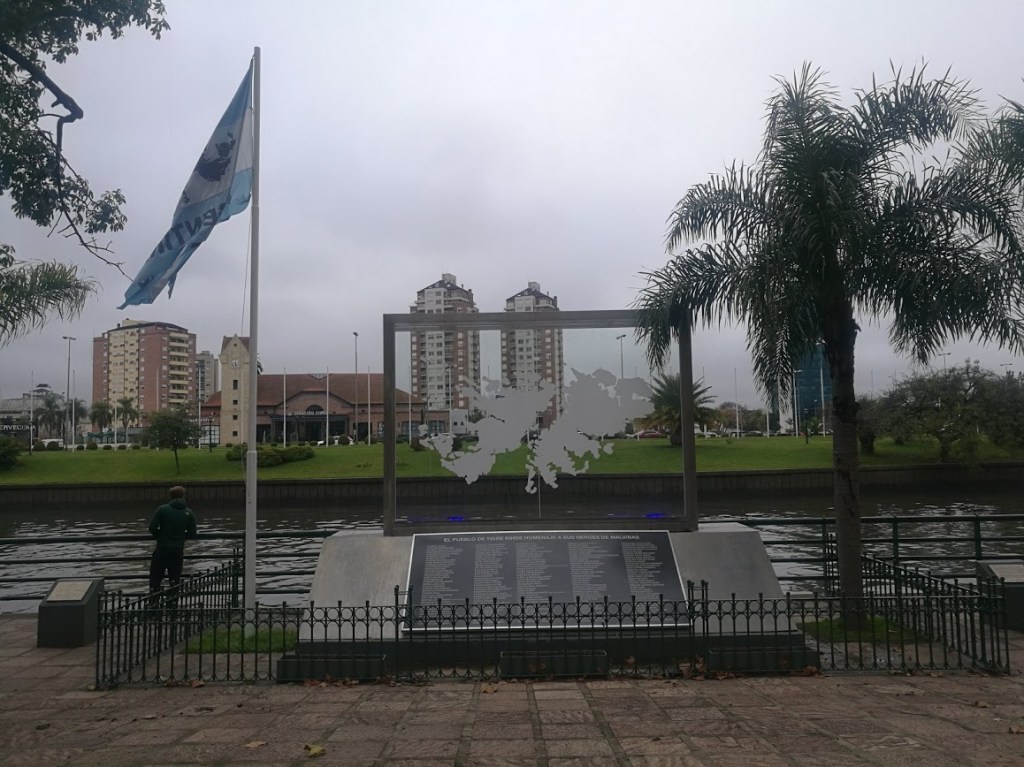
Existing prominent memorial in the delta town of Tigre 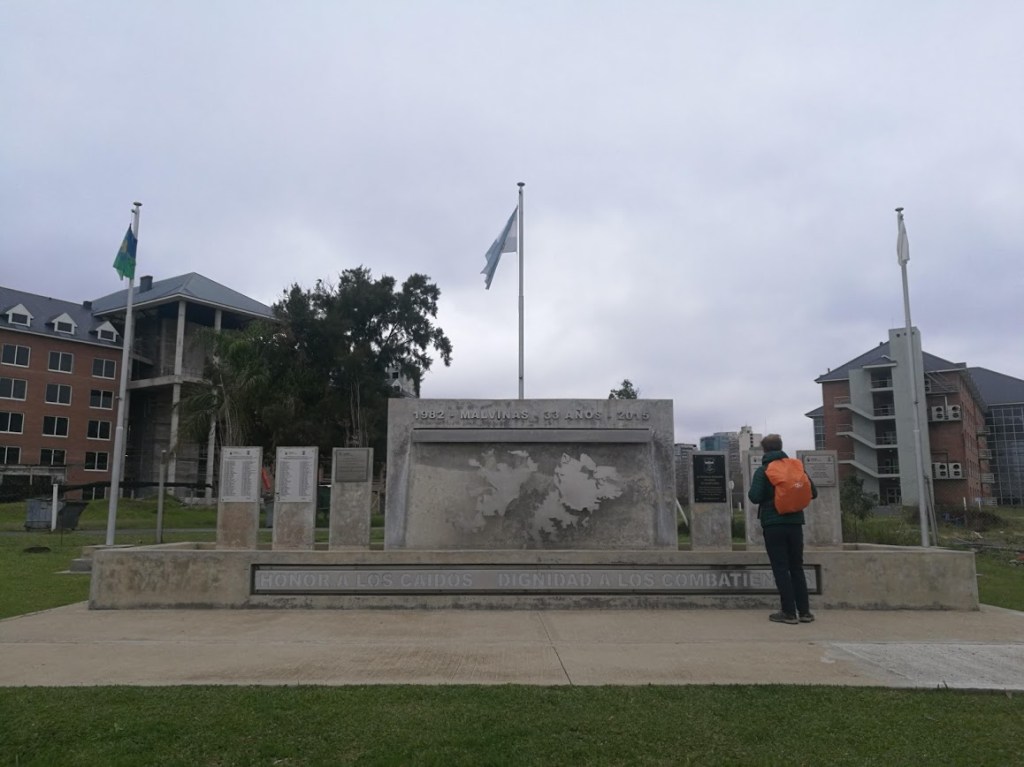
Another seemingly new memorial near banks of Rio de la Plata, Buenos Aires 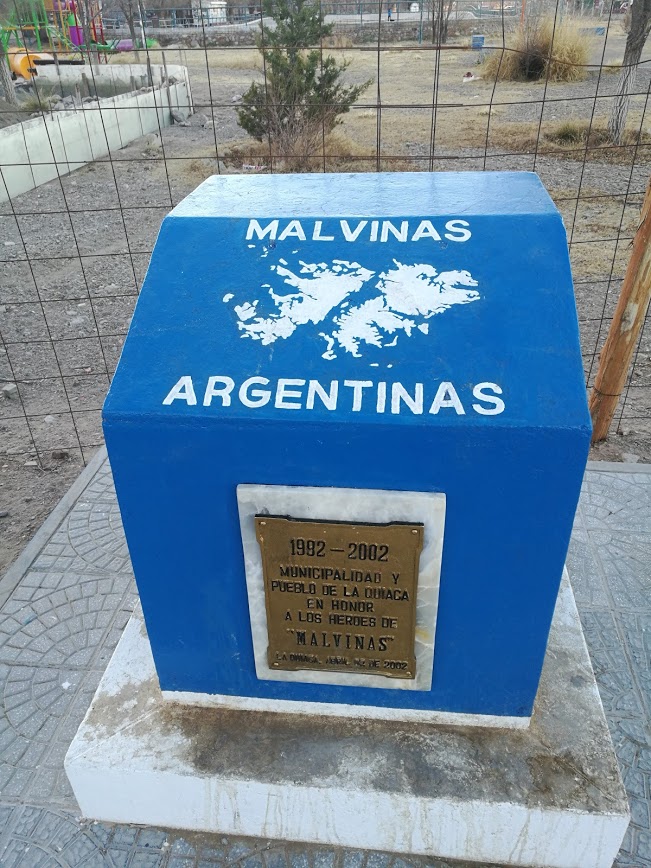
Memorial on Bolivian border 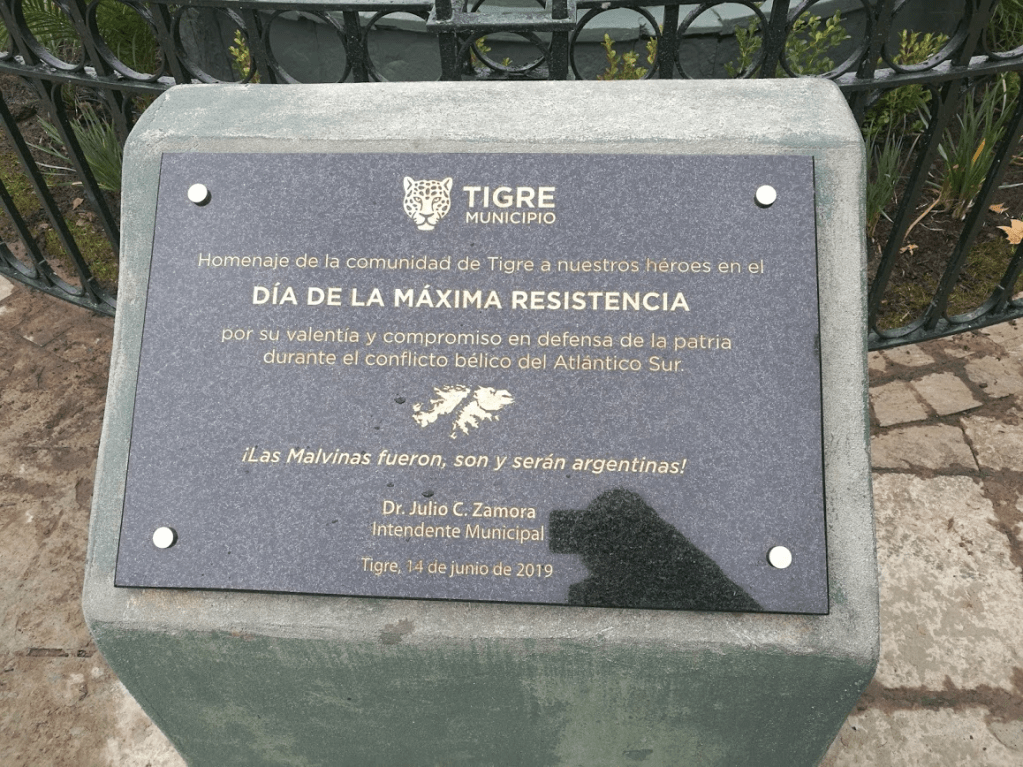
Brand new memorial in Tigre
But the jewel in the crown is the US$20m ‘Museo Malvinas e Islas del Atlantico Sur’ (Museum of Falklands Islands and South Atlantic), a project inspired by former President Christina Kirchner. It opened in 2017 and you can read a bit more about how it came into existence here.
This three-storey memory warehouse had so much interesting content we ended up visiting twice. A professionally-shot, highly emotive welcome film sets the tone. Laughing children wearing white play on a beach. They put a message in a bottle and float it out to sea and seem to be yearning for it to return. They listen studiously to their forebears explaining the islands’ history and geography. The symbolism of all of this is not subtle! The islands are incorporated into a longer-term narrative where the current situation of British control is portrayed as an aberration, a blip. Nature is the focus, perhaps as the humans have said in referenda in 1986 and 2013 that they want to remain British and as apparently Argentinian solders were baffled upon arrival to find a place totally unlike Argentina.
Another overarching message is around Argentina being a maritime nation, leaving the possibility of future renewed claims on other South Atlantic remote islands as well as the Falklands looking more reasonable than they otherwise might. It’s a powerful film and an immersive experience thanks to the darkened pod within which you watch it. You feel almost re-born when you emerge. The pod on the outside is plastered with a huge timeline stretching back thousands of years where visitors are invited to put into perspective the recent struggles over the islands, the failed invasion and the dictatorship. Appropriately ‘re-set’, you are then (genuinely) entertained and educated as you traverse the museum. A lot of money has been spent on this place and it’s highly effective.
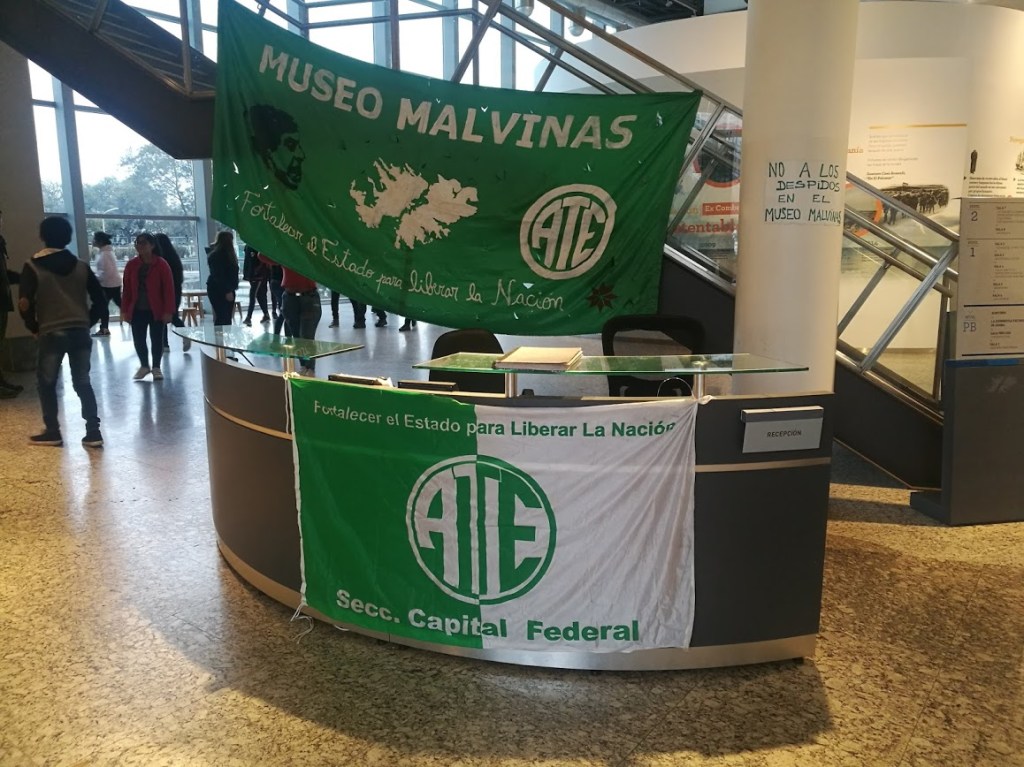
Museum entrance 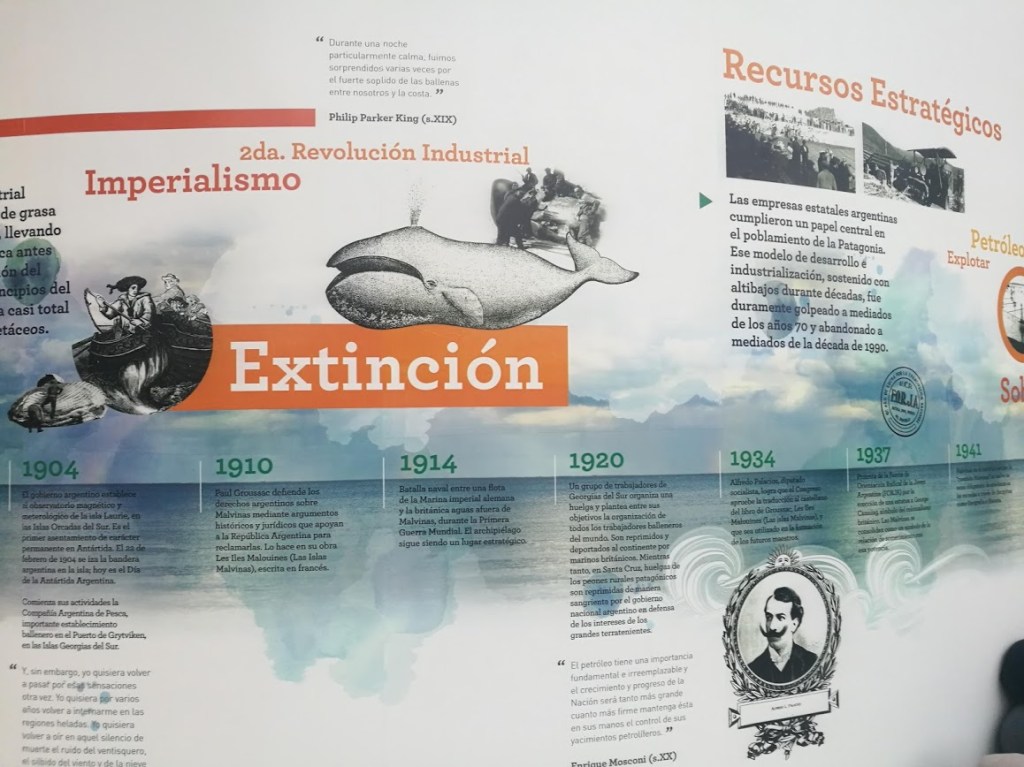
About a tenth of the exhaustive timeline you’re treated to at the start of your visit
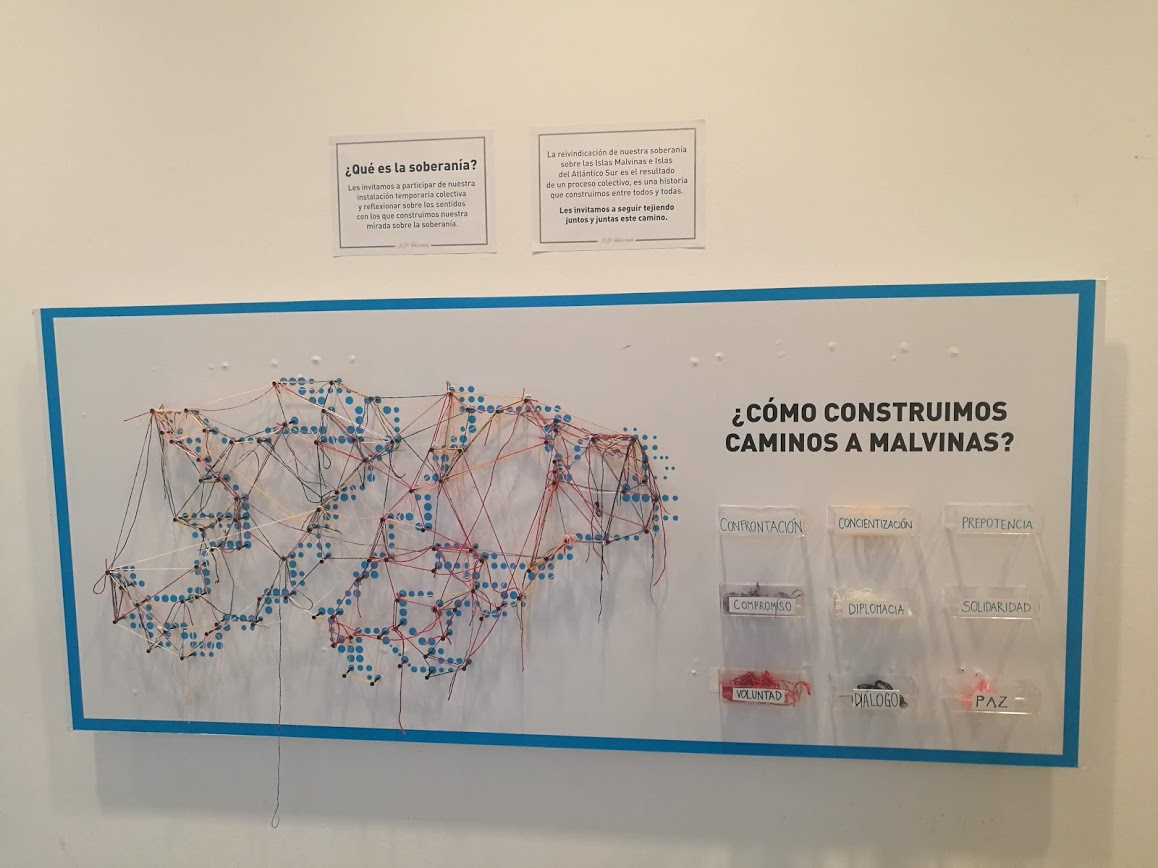
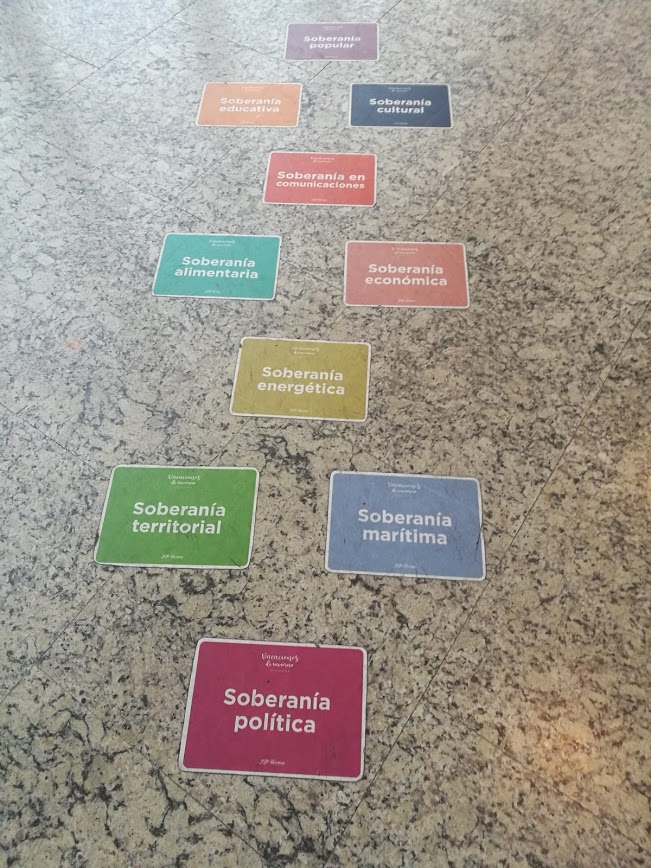
Visitors can contribute to discussions of ‘How do we build roads to the Falklands?’ by threading different-coloured strands of yarn onto pegs on a Falklands map. You can choose either compromise, diplomacy, dialogue, confrontation, cooperation and so on. You’re also prompted to reflect on the different dimensions of sovereignty at play in the Falklands question – economic, political, relating to energy, the natural environment etc. It’s worth saying that the outline of the Falklands islands is everywhere, so much that by the time you leave you may be able to sketch it from memory.
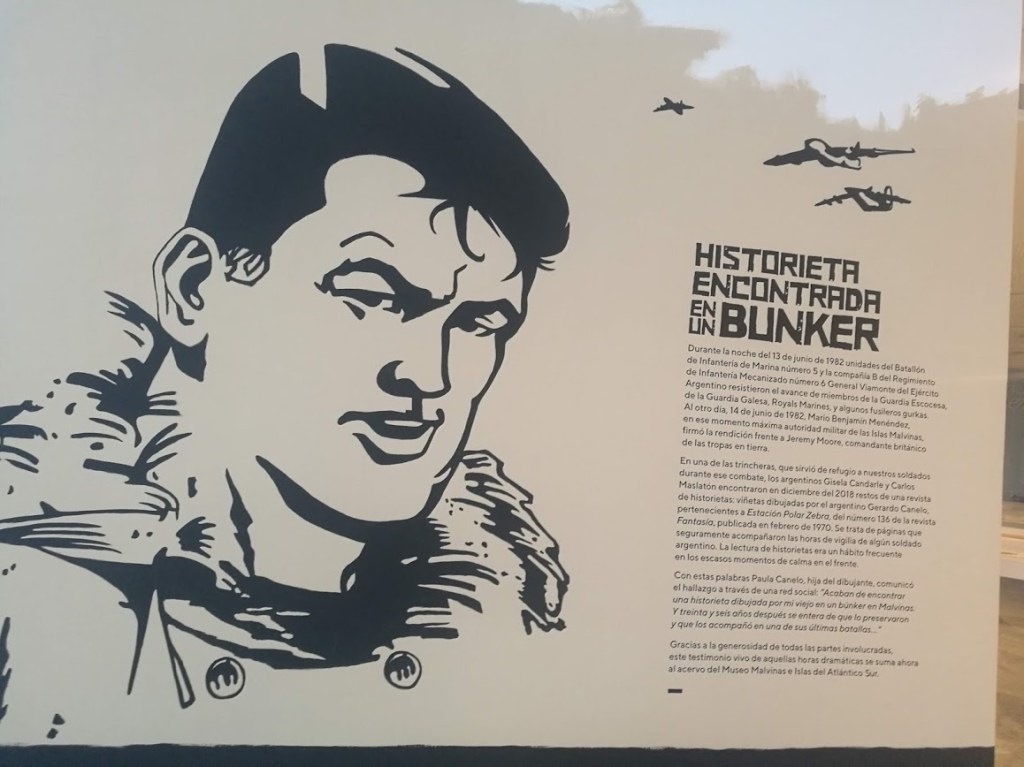
There’s a strong theme of heroic masculinity in the following section that reflects on the experience of one Argentinian soldier who we are told resisted an advance by British troops. Next are cartoons of soldiers reading comics in trenches. These don’t portray the reality of what these soldiers experienced and that this same museum lays bare on the third floor section covering the enquiry Argentina’s post-junta democratically-elected government held in the years after the conflict. Perhaps floor 1 is aimed at younger visitors on school trips who may not make it to the top floor.
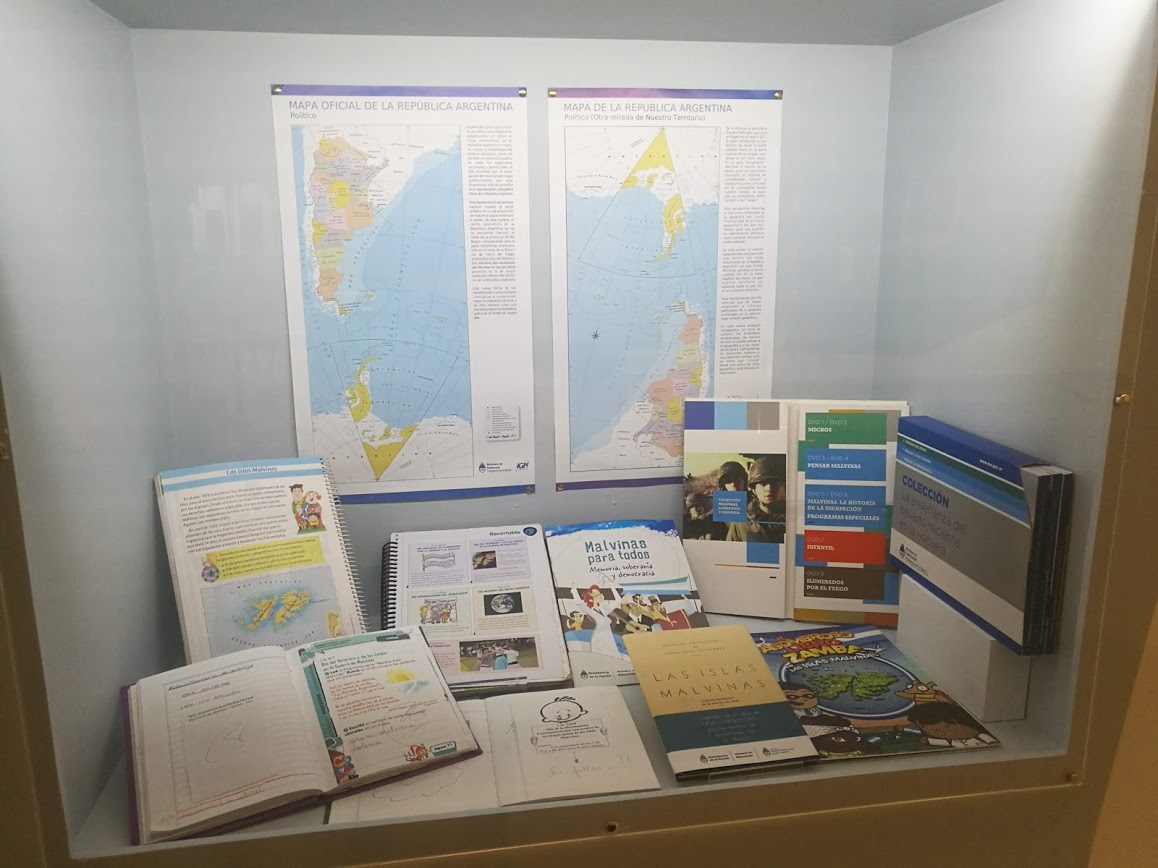
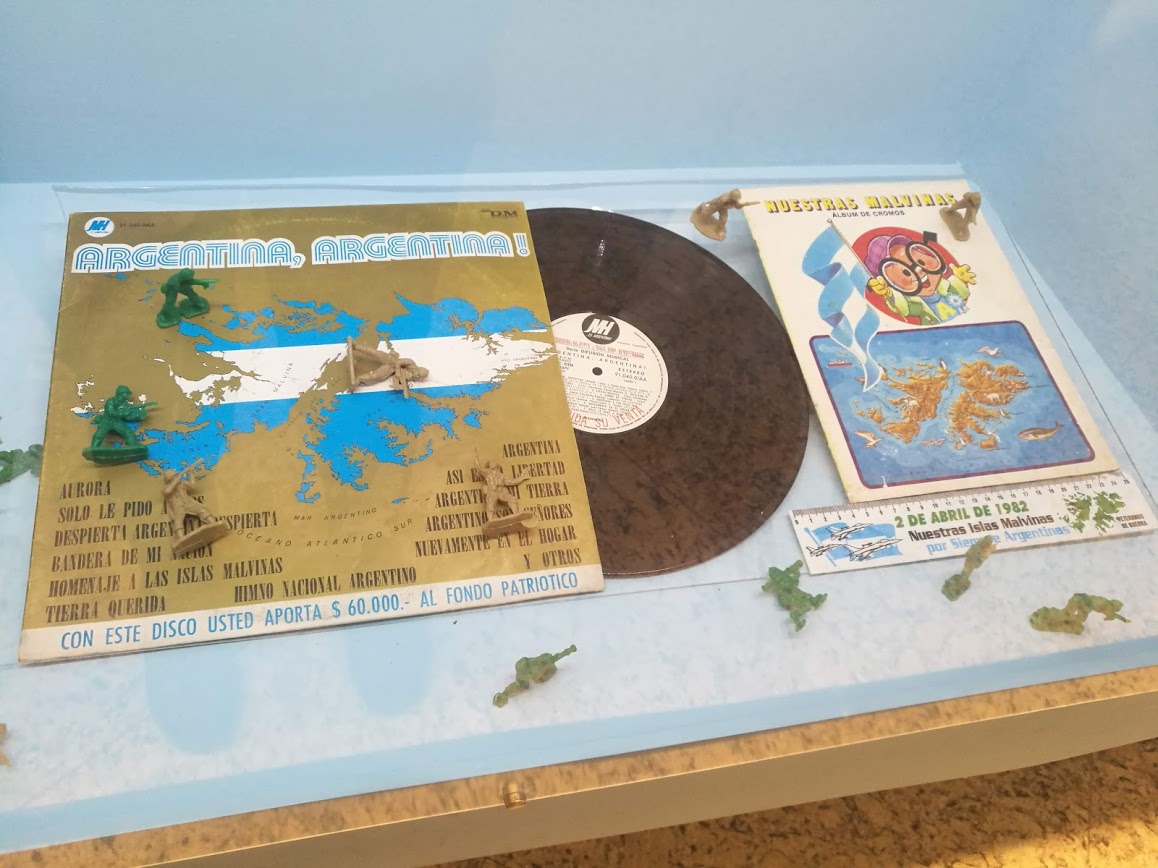
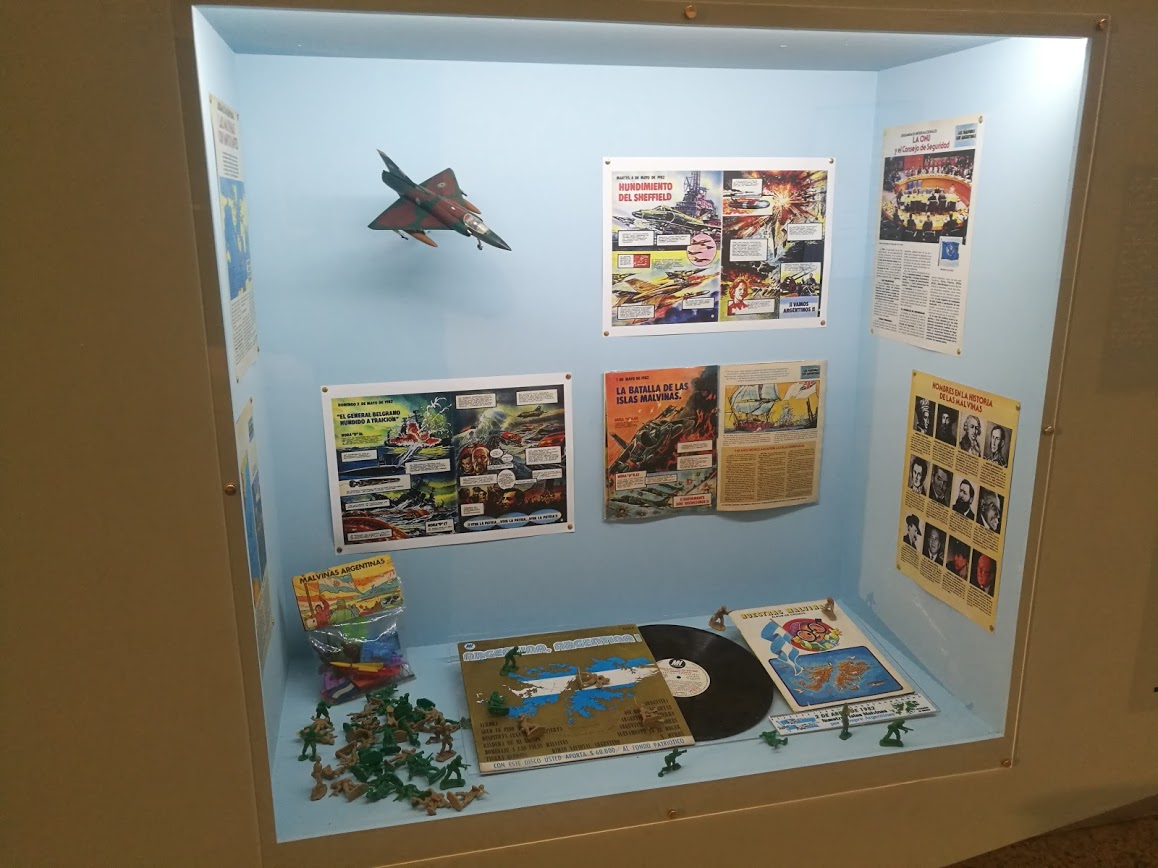
We get an insight into how children can be inculcated with nationalist sentiments during times of conflict through the comics, sticker books, toys and vinyl LPs (with a share of royalties going to the ‘patriotic fund’) – available in shops in 1982, showcased here. The policy of updating school textbooks in 2001 to place renewed emphasis on the Falklands question is explained in terms of the government needing to intervene more to sort out the economy and it therefore being reasonable that it would get more involved in what goes into teaching materials. Of course the ‘welcome distraction’ theory could also apply here. Letters penned by schoolchildren to soldiers come across as both sweet and hopeful and sinister when you consider they were being manipulated, even more ignorant of the reality of how the war was going than the adult population who believed until the end that they were on the brink of victory thanks to the junta’s propaganda machine.
One young writer enclosed his letter inside the wrapper of a bar of chocolate he sent to troops. It later turned up on sale in a corner shop, having been intercepted by the government and sold along with many other donations to shopkeepers for hard cash. A popular magazine did an investigation and exposed this situation soon after the war. That the museum was so unflinching about Galtieri’s catalogue of incompetence in trying to win the islands back was really interesting. His strategy is, it seems, being critiqued in forensic detail and held up as a policy of failure and ineptitude against which the current peaceful, manifest destiny-type approach promoted by the museum can define itself favourably.
The second and third floors give voice to troops abused by their own superiors in the trenches, showcase the inadequate gear they were sent off in and even explain how some troops died of starvation – possibly as rations were inadequate or because they were being stolen by other troops as discipline broke down. Of course this was all suppressed at the time and a lot of space is given over to enabling these voices to be heard, finally.
The museum ends as it started – with a slick and very moving film depicting the pain inflicted on Argentina’s people by the junta, protests initially in support of the war and then riots when the reality of defeat is communicated to the public. Attempts are made to order this tangle of memories through a series of thought-provoking statements in the final display. For the museum’s main message to be legitimate – that the Falklands still belong to Argentina and getting them back remains an urgent priority – memories of a brutal, incompetent dictatorship need to be split out from from memories of the Falklands war defeat and also from memories – real or manufactured – of the islands previously belonging to Argentina and hopes of reclaiming them without another disastrous war.
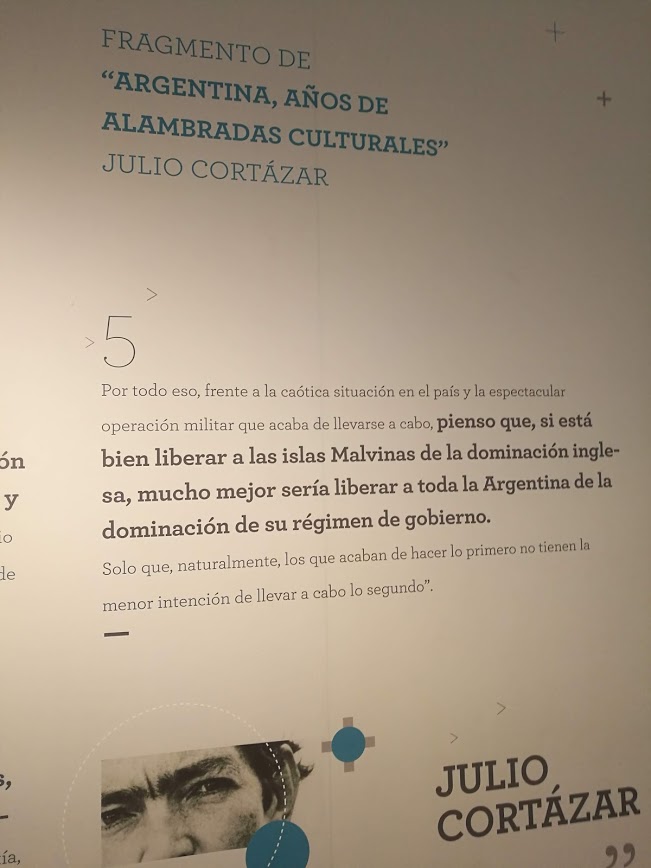
There were other fascinating aspects of this vast museum that there isn’t space to touch on. The section on British imperialism that must have raised the Ambassador’s eyebrows a bit, the shift towards portraying the Falklands issue as a regional one, the breathless celebration of the 1966 hijacking of an Aerolineas Argentinas plane by a militant group who landed on the Falklands, raised the flag and kidnapped islanders that jars a bit with the museum’s finger-wagging at rule-breaking ways of reclaiming the islands. This museum served as a window into the priorities of the current government by showing us how it depicts the past and how it skilfully (if one-sidedly when it comes to the British case for retaining sovereignty!) invites visitors to adapt, dispute and rework messages and meanings in displays. Visitors may be left with more questions than answers on their way home, mulling the following statements in the final display.
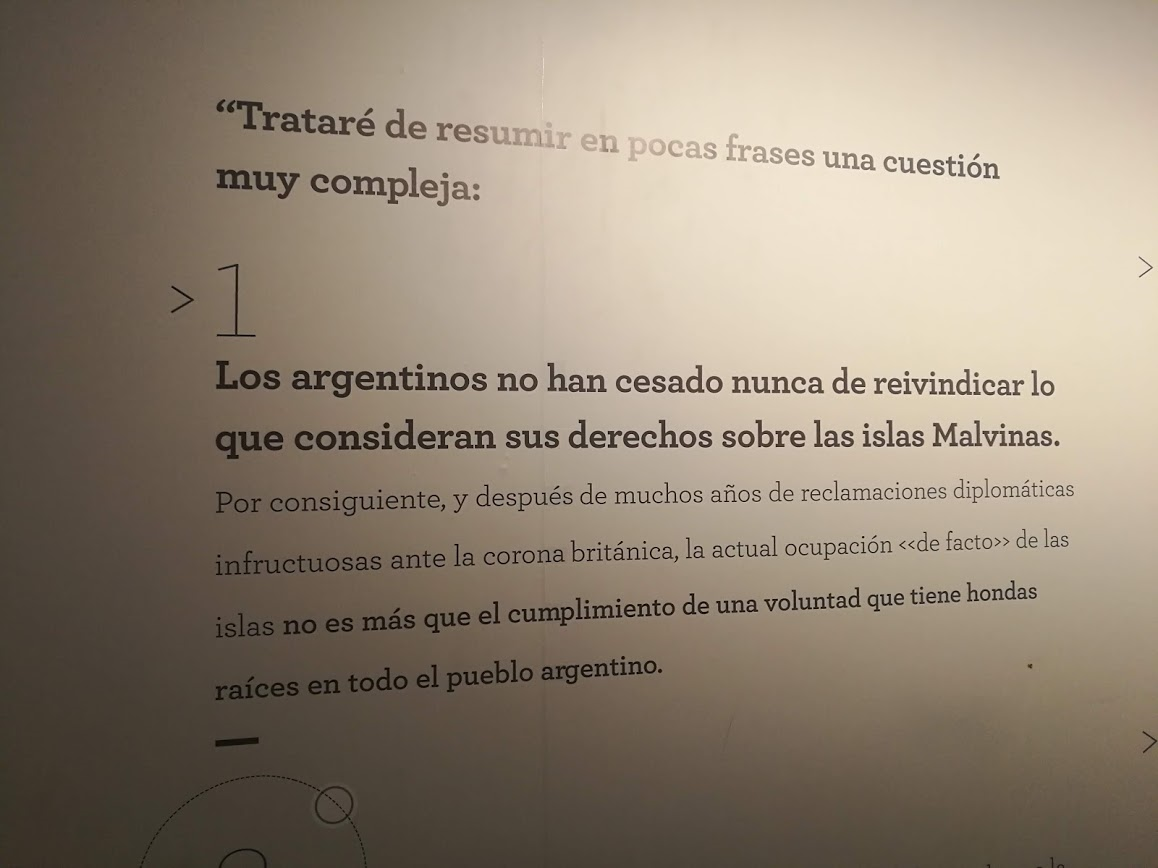
1. Argentinians have never stopped claiming what they consider their rights around the Falklands Islands. Consequently, and after many years of fruitless diplomatic claims with the British crown, the current occupation of the islands isn’t more than the fulfilment of a will that has deep roots in all the Argentinian people.
2. If this can be considered logical and justified, the fact that the occupation had been decided and achieved by the military government of Galtieri constitutes an act that the large majority of international observers consider a mere political move destined to distract the attention of Argentinians from the very serious situation unfolding at home.
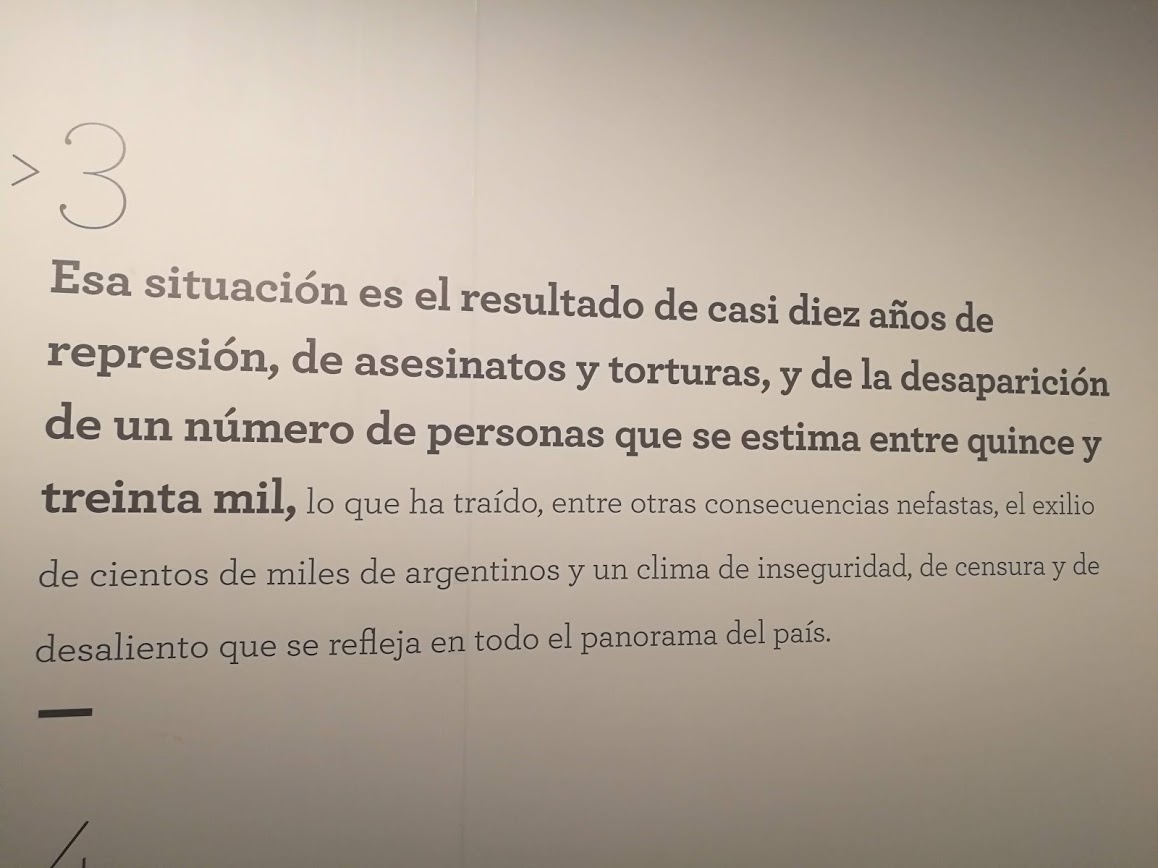
3. The situation is the result of nearly ten years of repression, assassinations and torture, and the disappearance of a number of people estimated to be about 15,000 – 30,000. What this has brought, among other consequences, is the exile of hundreds of thousands of Argentinians and a climate of insecurity, of censorship and discouragement that is reflected in the outlook of the country.
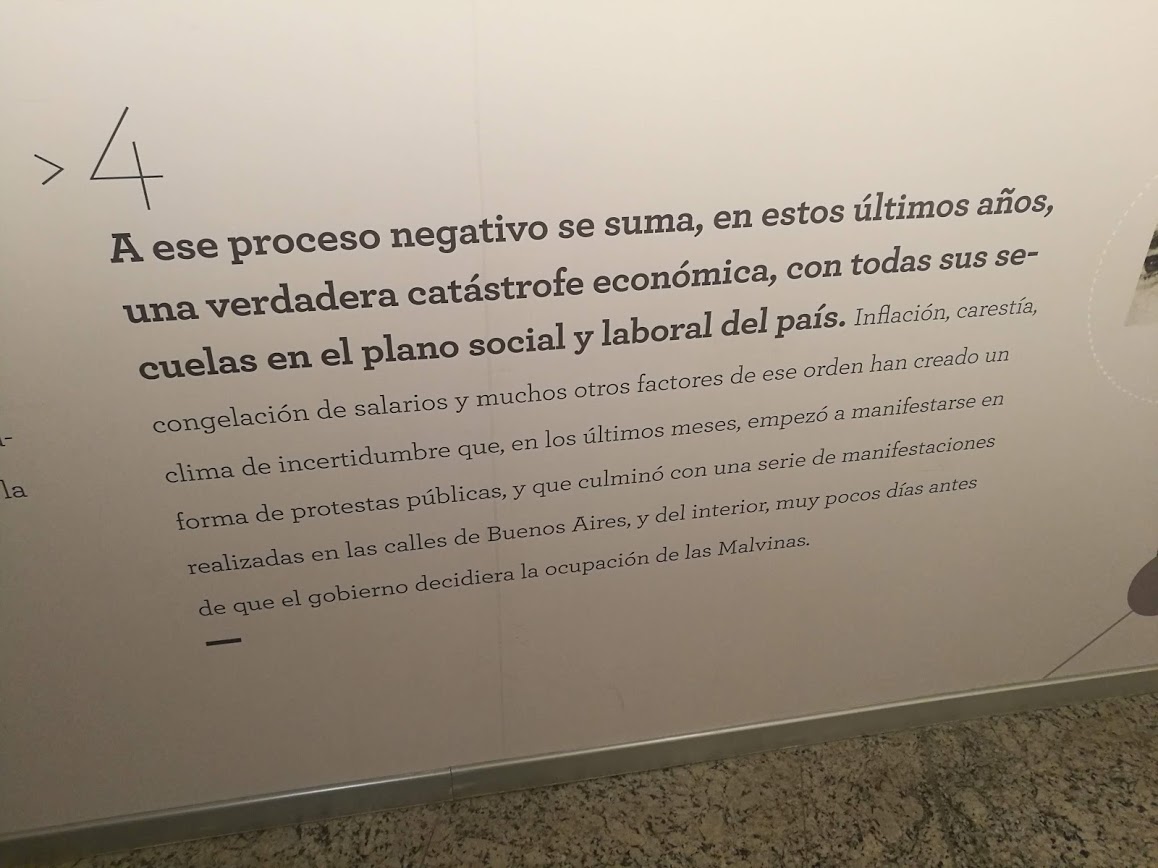
4. Added into that negative situation is, in the final last year, a catastrophic economic outcome with all its implications. Inflation, famine, freezing of salaries and many factors have created a climate of uncertainty that, in the final few months, started to manifest itself in public protests and that culminated in a series of protests in the streets of Buenos Aires and within the government, just a few days before the government decided to occupy the islands.
5. In all of this, faced with the chaotic situation in the country and the spectacular military operation that took place, consider this: if it is good to liberate the Falklands from British domination, it would be much better to liberate all of Argentina from the junta. Naturally only those who have just done the first of these things have less of an intention of carrying out the second thing.
 South American stories